
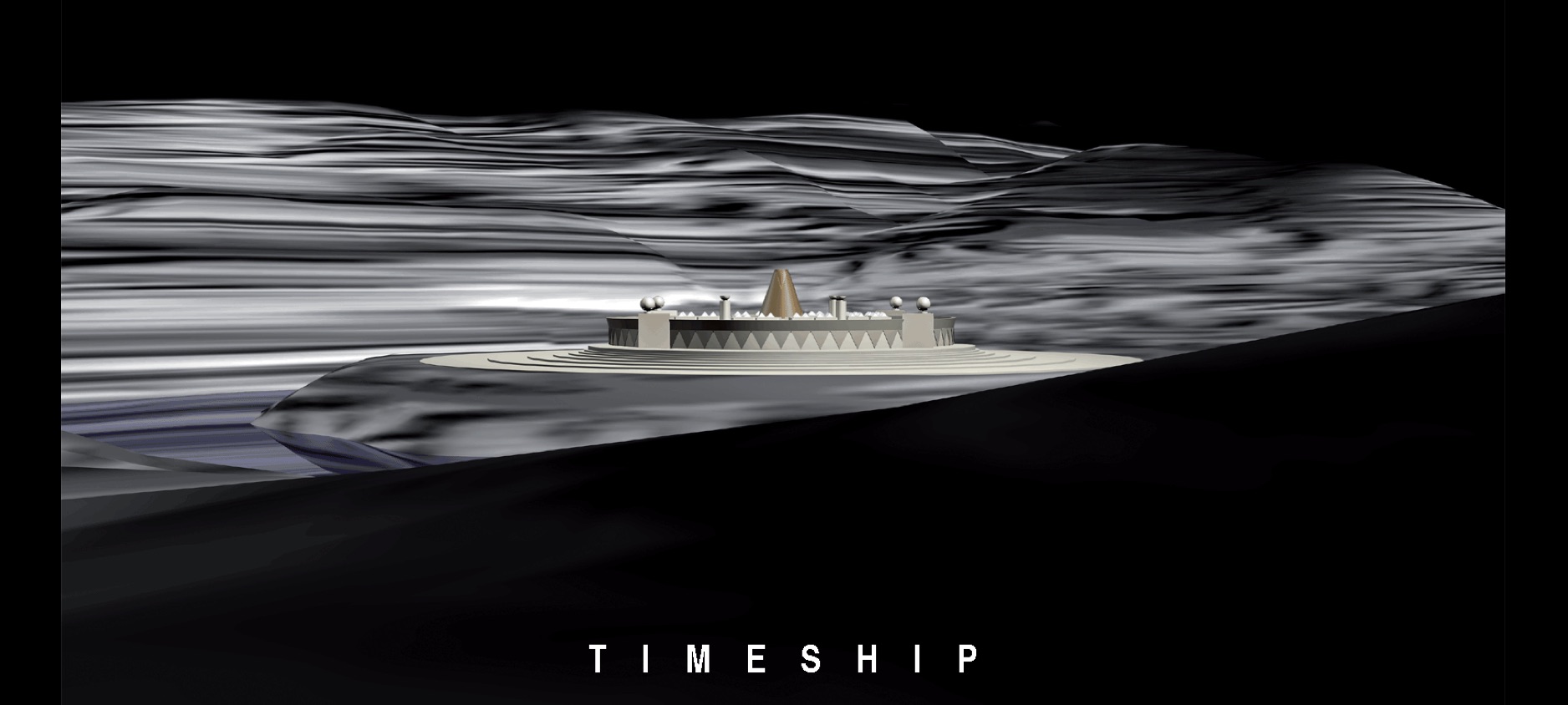
There’s a small town deep in the heart of Texas’ Hill Country called Comfort. It was founded in the mid-19th century by German immigrants. Its downtown area is held to be one of the most well-preserved historic business districts in Texas. Now, just over 160 years on there’s another preservation effort underway in Comfort.
This time, however, the work goes well beyond preserving buildings; Comfort may soon be the global hub for life-extension research and human cryopreservation. The ambitious, and not without controversy, project is known as the Timeship, and is the brainchild of architect Stephen Valentine and the Stasis Foundation.
Since one the the key aims of the Timeship is to preserve biological material — DNA, tissue and organ samples, and even cryopreserved humans — the building design presents some rather unique and stringent challenges. The building must withstand a nuclear blast or other attack; its electrical and mechanical systems must remain functional and stable for hundreds of years; it must be self-sustaining and highly secure.
Read more about the building and much more about the Timeship here.
Image: Timeship screenshot. Courtesy of Timeship.
 A recently opened solo art show takes an fascinating inside peek at the cryonics industry. Entitled “The Prospect of Immortality” the show features photography by Murray Ballard. Ballard’s collection of images follows a 5-year investigation of cryonics in England, the United States and Russia. Cryonics is the practice of freezing the human body just after death in the hope that future science will one day have the capability of restoring it to life.