
 It’s official — teens can’t stay off social media for more than 15 minutes. It’s no secret that many kids aged between 8 and 18 spend most of their time texting, tweeting and checking their real-time social status. The profound psychological and sociological consequences of this behavior will only start to become apparent ten to fifteen year from now. In the meantime, researchers are finding a general degradation in kids’ memory skills from using social media and multi-tasking while studying.
From Slate:
Living rooms, dens, kitchens, even bedrooms: Investigators followed students into the spaces where homework gets done. Pens poised over their “study observation forms,” the observers watched intently as the students—in middle school, high school, and college, 263 in all—opened their books and turned on their computers.
For a quarter of an hour, the investigators from the lab of Larry Rosen, a psychology professor at California State University–Dominguez Hills, marked down once a minute what the students were doing as they studied. A checklist on the form included: reading a book, writing on paper, typing on the computer—and also using email, looking at Facebook, engaging in instant messaging, texting, talking on the phone, watching television, listening to music, surfing the Web. Sitting unobtrusively at the back of the room, the observers counted the number of windows open on the students’ screens and noted whether the students were wearing earbuds.
Although the students had been told at the outset that they should “study something important, including homework, an upcoming examination or project, or reading a book for a course,” it wasn’t long before their attention drifted: Students’ “on-task behavior” started declining around the two-minute mark as they began responding to arriving texts or checking their Facebook feeds. By the time the 15 minutes were up, they had spent only about 65 percent of the observation period actually doing their schoolwork.
“We were amazed at how frequently they multitasked, even though they knew someone was watching,” Rosen says. “It really seems that they could not go for 15 minutes without engaging their devices,” adding, “It was kind of scary, actually.”
Concern about young people’s use of technology is nothing new, of course. But Rosen’s study, published in the May issue of Computers in Human Behavior, is part of a growing body of research focused on a very particular use of technology: media multitasking while learning. Attending to multiple streams of information and entertainment while studying, doing homework, or even sitting in class has become common behavior among young people—so common that many of them rarely write a paper or complete a problem set any other way.
But evidence from psychology, cognitive science, and neuroscience suggests that when students multitask while doing schoolwork, their learning is far spottier and shallower than if the work had their full attention. They understand and remember less, and they have greater difficulty transferring their learning to new contexts. So detrimental is this practice that some researchers are proposing that a new prerequisite for academic and even professional success—the new marshmallow test of self-discipline—is the ability to resist a blinking inbox or a buzzing phone.
The media multitasking habit starts early. In “Generation M2: Media in the Lives of 8- to 18-Year-Olds,” a survey conducted by the Kaiser Family Foundation and published in 2010, almost a third of those surveyed said that when they were doing homework, “most of the time” they were also watching TV, texting, listening to music, or using some other medium. The lead author of the study was Victoria Rideout, then a vice president at Kaiser and now an independent research and policy consultant. Although the study looked at all aspects of kids’ media use, Rideout told me she was particularly troubled by its findings regarding media multitasking while doing schoolwork.
“This is a concern we should have distinct from worrying about how much kids are online or how much kids are media multitasking overall. It’s multitasking while learning that has the biggest potential downside,” she says. “I don’t care if a kid wants to tweet while she’s watching American Idol, or have music on while he plays a video game. But when students are doing serious work with their minds, they have to have focus.”
For older students, the media multitasking habit extends into the classroom. While most middle and high school students don’t have the opportunity to text, email, and surf the Internet during class, studies show the practice is nearly universal among students in college and professional school. One large survey found that 80 percent of college students admit to texting during class; 15 percent say they send 11 or more texts in a single class period.
During the first meeting of his courses, Rosen makes a practice of calling on a student who is busy with his phone. “I ask him, ‘What was on the slide I just showed to the class?’ The student always pulls a blank,” Rosen reports. “Young people have a wildly inflated idea of how many things they can attend to at once, and this demonstration helps drive the point home: If you’re paying attention to your phone, you’re not paying attention to what’s going on in class.” Other professors have taken a more surreptitious approach, installing electronic spyware or planting human observers to record whether students are taking notes on their laptops or using them for other, unauthorized purposes.
Read the entire article here.
Image courtesy of Examiner.

 It should come as no surprise that those who deny the science of climate change and human-propelled impact on the environment would also shirk from purchasing products and services that are friendly to the environment.
 That a small group of Young British Artists (YBA) made an impact on the art scene in the UK and across the globe over the last 25 years is without question. Though, whether the public at large will, 10, 25 or 50 years from now (and beyond), recognize a Damien Hirst spin painting or Tracy Emin’s “My Bed” or a Sarah Lucas self-portrait — “The Artist Eating a Banana” springs to mind — remains an open question.
 Pathological criminals and the non-criminals who seek to understand them have no doubt co-existed since humans first learned to steal from and murder one another.
 Since Einstein first published his elegant theory of General Relativity almost 100 years ago it has proved to be one of most powerful and enduring cornerstones of modern science. Yet theorists and researchers the world over know that it cannot possibly remain the sole answer to our cosmological questions. It answers questions about the very, very large — galaxies, stars and planets and the gravitational relationship between them. But it fails to tackle the science of the very, very small — atoms, their constituents and the forces that unite and repel them, which is addressed by the elegant and complex, but mutually incompatible Quantum Theory.
 The collective IQ of Google, the company, inched up a few notches in January of 2013 when they hired


 Some words give us the creeps, they raise the hair on back of our heads, they make us squirm and give us an internal shudder. “Moist” is such as word.

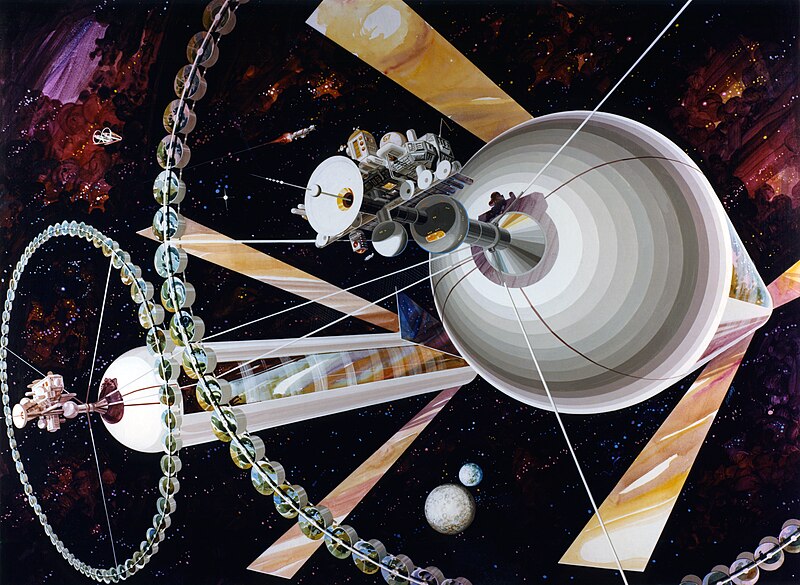

 By all accounts serial entrepreneur, inventor and futurist Ray Kurzweil is Google’s most famous employee, eclipsing even co-founders Larry Page and Sergei Brin. As an inventor he can lay claim to some impressive firsts, such as the flatbed scanner, optical character recognition and the music synthesizer. As a futurist, for which he is now more recognized in the public consciousness, he ponders longevity, immortality and the human brain.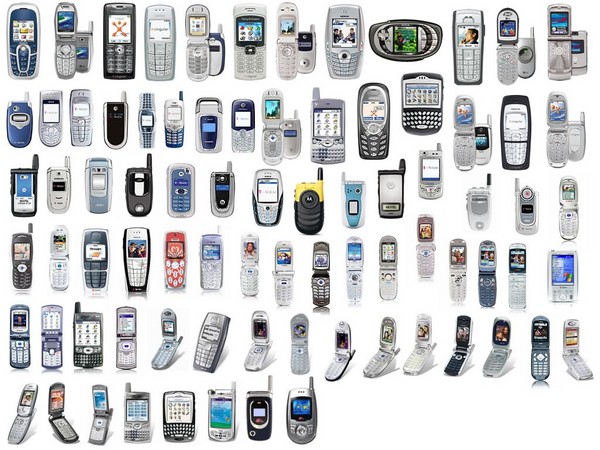

 Pseudoscience can be fun — for comedic purposes only of course. But when it is taken seriously and dogmatically, as it often is by a significant number of people, it imperils rational dialogue and threatens real scientific and cultural progress. There is no end to the lengthy list of fake scientific claims and theories — some of our favorites include: the moon “landing” conspiracy, hollow Earth, Bermuda triangle, crop circles, psychic surgery, body earthing, room temperature fusion, perpetual and motion machines.