Really, it was only a matter of time. First, digital cameras killed off their film-dependent predecessors and then dealt a death knell for Kodak. Now social media and the #hashtag is doing the same to the professional photographer.
Camera-enabled smartphones are ubiquitous, making everyone a photographer. And, with almost everyone jacked into at least one social network or photo-sharing site it takes only one point and a couple of clicks to get a fresh image posted to the internet. Ironically, the newsprint media, despite being in the business of news, have failed to recognize this news until recently.
So, now with an eye to cutting costs, and making images more immediate and compelling — via citizens — news organizations are re-tooling their staffs in four ways: first, fire the photographers; second, re-train reporters to take photographs with their smartphones; third, video, video, video; fourth, rely on the ever willing public to snap images, post, tweet, #hashtag and like — for free of course.
From Cult of Mac:
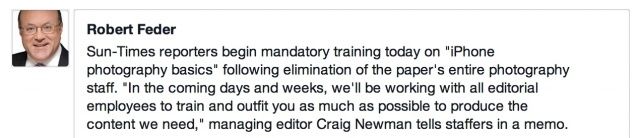
The Chicago Sun-Times, one of the remnants of traditional paper journalism, has let go its entire photography staff of 28 people. Now its reporters will start receiving “iPhone photography basics” training to start producing their own photos and videos.
The move is part of a growing trend towards publications using the iPhone as a replacement for fancy, expensive DSLRs. It’s a also a sign of how traditional journalism is being changed by technology like the iPhone and the advent of digital publishing.
When Hurricane Sandy hit New York City, reporters for Time used the iPhone to take photos on the field and upload to the publication’s Instagram account. Even the cover photo used on the corresponding issue of Time was taken on an iPhone.
Sun-Times photographer Alex Garcia argues that the “idea that freelancers and reporters could replace a photo staff with iPhones is idiotic at worst, and hopelessly uninformed at best.” Garcia believes that reporters are incapable of writing articles and also producing quality media, but she’s fighting an uphill battle.
Big newspaper companies aren’t making anywhere near the amount of money they used to due to the popularity of online publications and blogs. Free news is a click away nowadays. Getting rid of professional photographers and equipping reporters with iPhones is another way to cut costs.
The iPhone has a better camera than most digital point-and-shoots, and more importantly, it is in everyone’s pocket. It’s a great camera that’s always with you, and that makes it an invaluable tool for any journalist. There will always be a need for videographers and pro photographers that can make studio-level work, but the iPhone is proving to be an invaluable tool for reporters in the modern world.
Read the entire article here.
Image: Kodak 1949-56 Retina IIa 35mm Camera. Courtesy of Wikipedia / Kodak.
 History will probably show that humans are the likely cause for the mass disappearance and death of honey bees around the world.
 “There are three kinds of lies: lies, damned lies, and statistics”, goes the adage popularized by author Mark Twain.
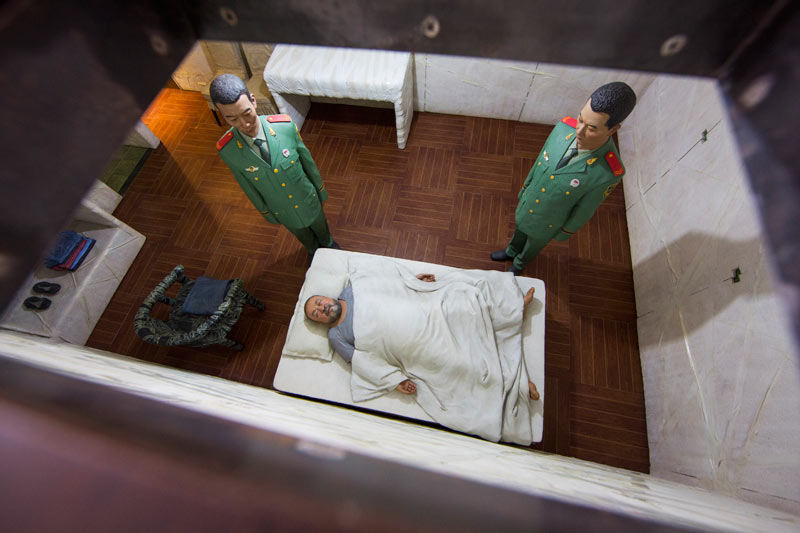 Artist Ai Weiwei has suffered at the hands of the Chinese authorities much more so than Andy Warhol’s brushes with surveillance from the FBI. Yet the two are remarkably similar: brash and polarizing views, distinctive art and creative processes, masterful self-promotion, savvy media manipulation and global ubiquity. This is all the more astounding given Ai Weiwei’s arrest, detentions and prohibition on travel outside of Beijing. He’s even made it to the Venice Biennale this year — only his art of course.
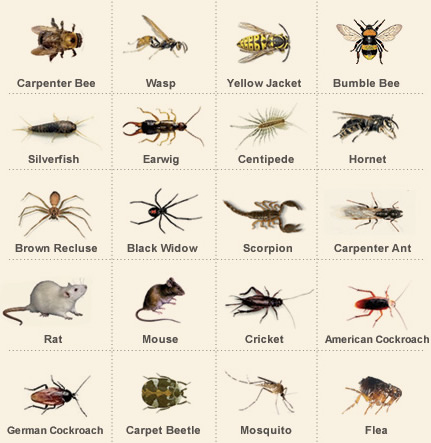 For centuries biologists, zoologists and ecologists have been mapping the wildlife that surrounds us in the great outdoors. Now a group led by microbiologist Noah Fierer at the University of Colorado Boulder is pursuing flora and fauna in one of the last unexplored eco-systems — the home. (Not for the faint of heart).
 “… But You Can Never Leave”. So goes one of the most memorable of lyrical phrases from The Eagles (Hotel California).
 In 1960 radio astronomer Frank Drake began the first systematic search for intelligent signals emanating from space. He was not successful, but his pioneering efforts paved the way for numerous other programs, including SETI (Search for Extra-Terrestrial Intelligence). The Drake Equation is named for him, and put simply, gives an estimate of the number of active, extraterrestrial civilizations with methods of communication in our own galaxy. Drake postulated the equation as a way to get the scientific community engaged in the search for life beyond our home planet.
 , Kepler has found more than 130 worlds and detected 3000 or so more possibles. The bounty has given astronomers the first proper census of planets in one region of our galaxy, allowing us to make estimates of the total population of life-friendly worlds across the Milky Way.
 If you are an English speaker and are over the age of 39 you may be pondering the fate of the English language. As the younger generations fill cyberspace with terabytes of misspelled texts and tweets do you not wonder if gorgeous grammatical language will survive? Are the technophobes and anti-Twitterites doomed to a future world of #hashtag-driven conversation and ADHD-like literature? Those of us who care are reminded of George Orwell’s 1946 essay “Politics and the English Language”, in which he decried the swelling ugliness of the language at the time.
 Good customer service once meant that a store or service employee would know you by name. This person would know your previous purchasing habits and your preferences; this person would know the names of your kids and your dog. Great customer service once meant that an employee could use this knowledge to anticipate your needs or personalize a specific deal. Well, this type of service still exists — in some places — but many businesses have outsourced it to offshore call center personnel or to machines, or both. Service may seem personal, but it’s not — service is customized to suit your profile, but it’s not personal in the same sense that once held true.
 Ubiquitous connectivity for, and between, individuals and businesses is widely held to be beneficial for all concerned. We can connect rapidly and reliably with family, friends and colleagues from almost anywhere to anywhere via a wide array of internet enabled devices. Yet, as these devices become more powerful and interconnected, and enabled with location-based awareness, such as GPS (Global Positioning System) services, we are likely to face an increasing acute dilemma — connectedness or privacy?
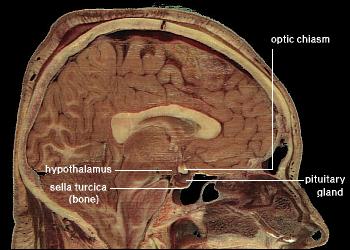 Researchers are continuing to make great progress in unraveling the complexities of aging. While some fingers point to the shortening of telomeres — end caps — in our chromosomal DNA as a contributing factor, other research points to the hypothalamus. This small sub-region of the brain has been found to play a major role in aging and death (though, at the moment only in mice).
 Stephen Wolfram, physicist, mathematician and complexity theorist, has taken big data ideas to an entirely new level — he’s quantifying himself and his relationships. He calls this discipline personal analytics.
 Yesterday, May 10, 2013, scientists published new measures of atmospheric carbon dioxide (CO2). For the first time in human history CO2 levels reached an average of 400 parts per million (ppm). This is particularly troubling since CO2 has long been known as the most potent heat trapping component of the atmosphere. The sobering milestone was recorded from the Mauna Loa Observatory in Hawaii — monitoring has been underway at the site since the mid-1950s.
 We live in a world of brands, pitches, advertising, promotions, PR, consumer research, product placement, focus groups, and 24/7 spin. So, it should come as no surprise that even that ubiquitous and utilitarian listing of food and drink items from your local restaurant — the menu — would come in for some 21st century marketing treatment.