Essentials
theDiagonal is a personal blog by Mike Gerra, skeptic, technologist, psychologist, artist, humanist, collector of grand, eclectic ideas.theDiagonal blog connects the dots across multiple disciplines for inquisitive, objective and critical thinkers, exploring the vertices of big science, disruptive innovation, global sustainability, illuminating literature and leftfield art. It is on this diagonal that creativity thrives, big ideas take flight and reason triumphs.
Monthly Archives: January 2012
Tuesday, January 31, 2012
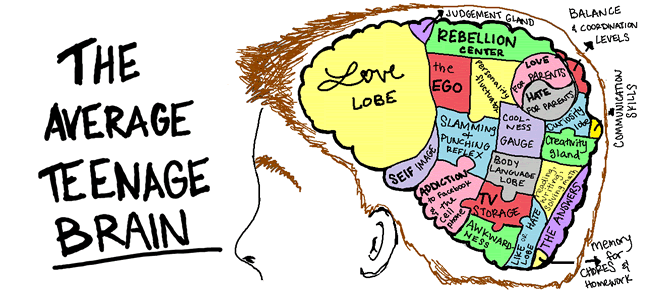
Inside the Weird Teenage Brain
From the Wall Street Journal:
“What was he thinking?” It’s the familiar cry of bewildered parents trying to understand why their teenagers act the way they do.
How does the boy who can thoughtfully explain the reasons never to drink and drive end up in a drunken crash? Why does the girl who knows all about birth control find herself pregnant by a boy she doesn’t even like? What happened to the gifted, imaginative child who excelled through high school but then dropped out of college, drifted from job to job and now lives in his parents’ basement?
Adolescence has always been troubled, but for reasons that are somewhat mysterious, puberty is now kicking in at an earlier and earlier age. A leading theory points to changes in energy balance as children eat more and move less.
...read moreMonday, January 30, 2012
See the Aurora, then Die

One item that features prominently on so-called “things-to-do-before-you-die” lists is seeing the Aurora Borealis, or Northern Lights.
The recent surge in sunspot activity and solar flares has caused a corresponding uptick in geo-magnetic storms here on Earth. The resulting Aurorae have been nothing short of spectacular. More images here, courtesy of Smithsonian magazine.
Send to KindleSunday, January 29, 2012
Do We Need Philosophy Outside of the Ivory Tower?
In her song “What I Am”, Edie Brickell reminds us that philosophy is “the talk on a cereal box” and “a walk on the slippery rocks“.
Philosopher Gary Gutting makes the case that the discipline is more important than ever, and yes, it belongs in the mainstream consciousness, and not just within the confines of academia.
From the New York Times:
Almost every article that appears in The Stone provokes some comments from readers challenging the very idea that philosophy has anything relevant to say to non-philosophers. There are, in particular, complaints that philosophy is an irrelevant “ivory-tower” exercise, useless to any except those interested in logic-chopping for its own sake.
...read moreSaturday, January 28, 2012
Forget the Groupthink: Rise of the Introvert
Author Susan Cain reviews her intriguing book, “Quiet : The Power of Introverts” in an interview with Gareth Cook over at Mind Matters / Scientific American.


She shows us how social and business interactions and group-driven processes, often led and coordinated by extroverts, may not be the most efficient method for introverts to shine creatively.
From Mind Matters:
Cook: This may be a stupid question, but how do you define an introvert? How can somebody tell whether they are truly introverted or extroverted?
...read moreFriday, January 27, 2012
Our Beautiful Home
Thursday, January 26, 2012
Self-Esteem and Designer Goods
Sellers have long charged a premium for objects that confer some kind of social status, even if they offer few, if any, functional benefits over cheaper products. Designer sunglasses, $200,000 Swiss watches, and many high-end cars often seem to fall into this category. If a marketer can make a mundane item seem like a status symbol—maybe by wrapping it in a fancy package or associating it with wealth, success or beauty—they can charge more for it.
Although this practice may seem like a way to trick consumers out of their hard-earned cash, studies show that people do reap real psychological benefits from the purchase of high status items. Still, some people may gain more than others do, and studies also suggest that buying fancy stuff for yourself is unlikely to be the best way to boost your happiness or self-esteem.
...read moreWednesday, January 25, 2012
Political and Social Stability and God
theDiagonal has carried several recent articles (here and here) that paint atheists in the same category as serial killers and child molesters, particularly in the United States. Why are atheists so reviled?
A study by Will Gervais and Ara Norenzayanat at the University of British Columbia shows that it boils down to trust. Simply put, we are more likely to find someone to be trustworthy if we believe God is watching over us.
Interestingly, their research also showed that atheists are more likely to be found in greater numbers in a population governed by a stable government with a broad social safety-net. Political instability, it seems, drives more citizens to believe in God.
From Scientific American:
Tuesday, January 24, 2012
Do We Become More Conservative as We Age?
A popular stereotype suggests that we become increasingly conservative in our values as we age. Thus, one would expect that older voters would be more likely to vote for Republican candidates. However, a recent social study debunks this view.
From Discovery:
Amidst the bipartisan banter of election season, there persists an enduring belief that people get more conservative as they age — making older people more likely to vote for Republican candidates.
Ongoing research, however, fails to back up the stereotype. While there is some evidence that today’s seniors may be more conservative than today’s youth, that’s not because older folks are more conservative than they use to be. Instead, our modern elders likely came of age at a time when the political situation favored more conservative views.
...read moreMonday, January 23, 2012
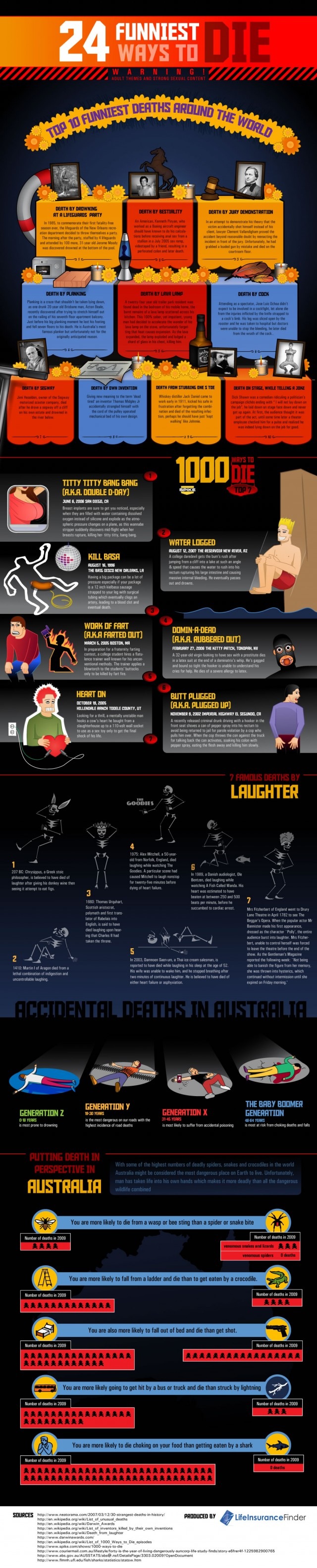
Oddest Ways to Die
It’s a Monday, so let’s contemplate some odd and humorous ways to cease to be and then head off to the insurance office.
Infographic courtesy of LifeInsuranceFinder.
Send to KindleSunday, January 22, 2012
Wikipedia Blackout and Intellectual Curiosity
Perhaps the recent dimming of Wikipedia, for 24 hours on January 18, (and other notable websites) in protest of the planned online privacy legislation in the U.S. Congress, wasn’t all that bad.
Many would argue that Wikipedia has been a great boon in democratizing content authorship and disseminating information. So, when it temporarily shuttered its online doors, many shuddered from withdrawal. Yet, this “always on”, instantly available, crowdsourced resource is undermining an important human trait: intellectual curiosity.
When Wikipedia went off-air many of us, including Jonathan Jones, were forced to search a little deeper and a little longer for facts and information. In doing so, it reawakened our need to discover, connect, and conceptualize for ourselves, rather than take as rote the musings of the anonymous masses, just one click away. Yes, we exercised our brains a little harder that day.
By Jonathan Jones over at the Guardian:
Saturday, January 21, 2012
Defying Gravity using Science
Gravity defying feats have long been a favored pastime for magicians and illusionists. Well, science has now caught up to and surpassed our friends with sleight of hand. Check out this astonishing video (after the 10 second ad) of a “quantum locked”, levitating superconducting disc, courtesy of New Scientist.

From the New Scientist:
FOR centuries, con artists have convinced the masses that it is possible to defy gravity or walk through walls. Victorian audiences gasped at tricks of levitation involving crinolined ladies hovering over tables. Even before then, fraudsters and deluded inventors were proudly displaying perpetual-motion machines that could do impossible things, such as make liquids flow uphill without consuming energy. Today, magicians still make solid rings pass through each other and become interlinked – or so it appears. But these are all cheap tricks compared with what the real world has to offer.
...read moreFriday, January 20, 2012
Handedness Shapes Perception and Morality
A group of new research studies show that our left- or right-handedness shapes our perception of “goodness” and “badness”.


From Scientific American:
A series of studies led by psychologist Daniel Casasanto suggests that one thing that may shape our choice is the side of the menu an item appears on. Specifically, Casasanto and his team have shown that for left-handers, the left side of any space connotes positive qualities such as goodness, niceness, and smartness. For right-handers, the right side of any space connotes these same virtues. He calls this idea that “people with different bodies think differently, in predictable ways” the body-specificity hypothesis.
...read moreThursday, January 19, 2012
An Evolutionary Benefit to Self-deception
From Scientific American:
We lie to ourselves all the time. We tell ourselves that we are better than average — that we are more moral, more capable, less likely to become sick or suffer an accident. It’s an odd phenomenon, and an especially puzzling one to those who think about our evolutionary origins. Self-deception is so pervasive that it must confer some advantage. But how could we be well served by a brain that deceives us? This is one of the topics tackled by Robert Trivers in his new book, “The Folly of Fools,” a colorful survey of deception that includes plane crashes, neuroscience and the transvestites of the animal world. He answered questions from Mind Matters editor Gareth Cook.
...read moreWednesday, January 18, 2012
Are You a Nerd or a Geek?
Different, but similar, or poles apart? You decide with the help of this nerdy and geekish infographic.
Infographic courtesy of mastersinit.org.
Send to KindleTuesday, January 17, 2012
On the Need for Charisma
From Project Syndicate:
A leadership transition is scheduled in two major autocracies in 2012. Neither is likely to be a surprise. Xi Jinping is set to replace Hu Jintao as President in China, and, in Russia, Vladimir Putin has announced that he will reclaim the presidency from Dmitri Medvedev. Among the world’s democracies, political outcomes this year are less predictable. Nicolas Sarkozy faces a difficult presidential re-election campaign in France, as does Barack Obama in the United States.
In the 2008 US presidential election, the press told us that Obama won because he had “charisma” – the special power to inspire fascination and loyalty. If so, how can his re-election be uncertain just four years later? Can a leader lose his or her charisma? Does charisma originate in the individual, in that person’s followers, or in the situation? Academic research points to all three.
...read moreMonday, January 16, 2012
Sunday, January 15, 2012
Shrink-Wrapped Couples
Once in a while a photographer comes along with a simple yet thoroughly new perspective. Japanese artist Photographer Hal fits this description. His images of young Japanese in a variety of contorted and enclosed situations are sometimes funny and disturbing, but certainly different and provocative.
From flavorwire:
Japanese artist Photographer Hal has stuffed club kids into bathtubs and other cramped spaces in his work before, but this time he’s chosen to shrink-wrap them like living dolls squirming under plastic. With some nude, and some dressed in candy-colored attire, Hal covers his models with a plastic sheeting that he vacuums the air from in order to distort their features and bond them together. It only takes a few seconds for him to snap several images before releasing them, and the results are humorous and somewhat grotesque.
See more of Photographer Hal’s work here.
Send to KindleSaturday, January 14, 2012
Games of Skill: Humans Versus Computers
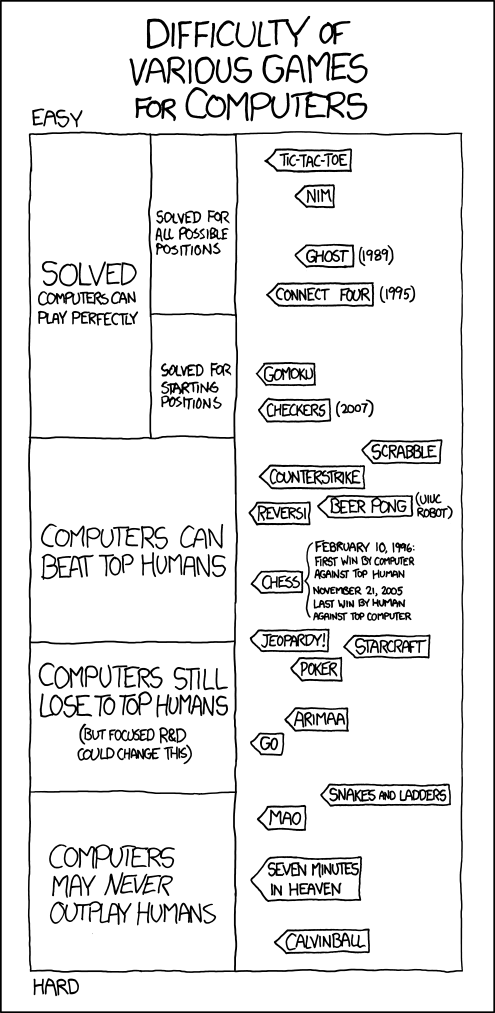
Computers have already surpassed humans at checkers, scrabble and chess. But will they ever hold sway of humans at Go or Snakes and Ladders? A fun infographic courtesy of xkcd:
Image courtesy of xkcd.com.
Send to KindleFriday, January 13, 2012
The Unconscious Mind Boosts Creativity
From Miller-McCune:
New research finds we’re better able to identify genuinely creative ideas when they’ve emerged from the unconscious mind.
Truly creative ideas are both highly prized and, for most of us, maddeningly elusive. If our best efforts produce nothing brilliant, we’re often advised to put aside the issue at hand and give our unconscious minds a chance to work.
Newly published research suggests that is indeed a good idea — but not for the reason you might think.
A study from the Netherlands finds allowing ideas to incubate in the back of the mind is, in a narrow sense, overrated. People who let their unconscious minds take a crack at a problem were no more adept at coming up with innovative solutions than those who consciously deliberated over the dilemma.
...read moreThursday, January 12, 2012
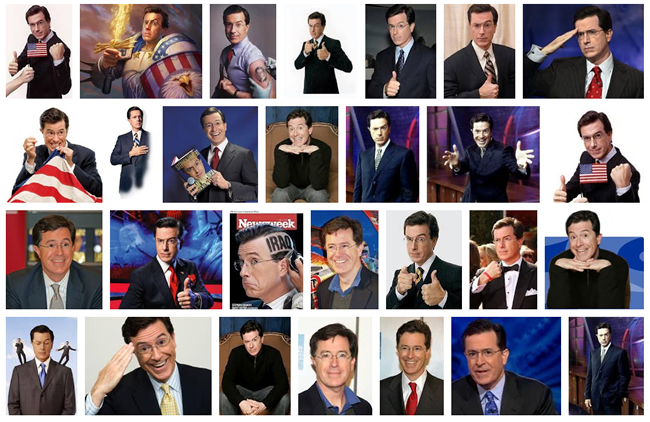
Stephen Colbert: Seriously Funny
A fascinating article of Stephen Colbert, a funny man with some serious jokes about our broken political process.
From the New York Times magazine:
There used to be just two Stephen Colberts, and they were hard enough to distinguish. The main difference was that one thought the other was an idiot. The idiot Colbert was the one who made a nice paycheck by appearing four times a week on “The Colbert Report” (pronounced in the French fashion, with both t’s silent), the extremely popular fake news show on Comedy Central. The other Colbert, the non-idiot, was the 47-year-old South Carolinian, a practicing Catholic, who lives with his wife and three children in suburban Montclair, N.J., where, according to one of his neighbors, he is “extremely normal.” One of the pleasures of attending a live taping of “The Colbert Report” is watching this Colbert transform himself into a Republican superhero.
...read moreWednesday, January 11, 2012
Crossword Puzzles and Cognition
From the New Scientist:
TACKLING a crossword can crowd the tip of your tongue. You know that you know the answers to 3 down and 5 across, but the words just won’t come out. Then, when you’ve given up and moved on to another clue, comes blessed relief. The elusive answer suddenly occurs to you, crystal clear.
The processes leading to that flash of insight can illuminate many of the human mind’s curious characteristics. Crosswords can reflect the nature of intuition, hint at the way we retrieve words from our memory, and reveal a surprising connection between puzzle solving and our ability to recognise a human face.
...read moreTuesday, January 10, 2012
Morality for Atheists
The social standing of atheists seems to be on the rise. Back in December we cited a research study that found atheists to be more reviled than rapists. Well, a more recent study now finds that atheists are less disliked than members of the Tea Party.
With this in mind Louise Antony ponders how it is possible for atheists to acquire morality without the help of God.
From the New York Times:
I was heartened to learn recently that atheists are no longer the most reviled group in the United States: according to the political scientists Robert Putnam and David Campbell, we’ve been overtaken by the Tea Party. But even as I was high-fiving my fellow apostates (“We’re number two! We’re number two!”), I was wondering anew: why do so many people dislike atheists?
...read moreMonday, January 9, 2012
The Sheer Joy of Unconnectedness
Seventeenth century polymath Blaise Pascal had it right when he remarked, “Distraction is the only thing that consoles us for our miseries, and yet it is itself the greatest of our miseries.”

Here in the 21st century we have so many distractions that even our distractions get little attention. Author Pico Iyer shares his prognosis, and shows that perhaps the very much younger generation may be making some progress “in terms of sensing not what’s new, but what’s essential.”
From the New York Times:
ABOUT a year ago, I flew to Singapore to join the writer Malcolm Gladwell, the fashion designer Marc Ecko and the graphic designer Stefan Sagmeister in addressing a group of advertising people on “Marketing to the Child of Tomorrow.” Soon after I arrived, the chief executive of the agency that had invited us took me aside. What he was most interested in, he began — I braced myself for mention of some next-generation stealth campaign — was stillness.
...read moreSunday, January 8, 2012
Levelling the Political Playing Field
Let’s face it, taking money out of politics in the United States, especially since the 2010 Supreme Court Decision (Citizens United v. Federal Election Commission), is akin to asking a hardcore addict to give up his or her favorite substance — it’s unlikely to be easy, if at all possible.
So, another approach might be to “re-distribute” the funds more equitably. Not a new idea — a number of European nations do this today. However, Max Frankel over at the NY Review of Books offers a thoughtful proposal with a new twist.
By Max Frankel:
Saturday, January 7, 2012
How to (Not) Read a Tough Book
Ever picked up a copy of the Illiad or War and Peace or Foucault’s Pendulum or Finnegan’s Wake leafed through the first five pages and given up? Well, you may be in good company. So, here are some useful tips for the readers, and non-readers alike, on how to get through some notable classics that demand our fullest attention and faculties.
From the Wall Street Journal:
I’m determined to finish “The Iliad” before I start anything else, but I’ve been having trouble picking it up amid all the seasonal distractions and therefore I’m not reading anything at all: It’s blocking other books. Suggestions?
—E.S., New York
...read moreFriday, January 6, 2012
From Nine Dimensions to Three
Over the last 40 years or so physicists and cosmologists have sought to construct a single grand theory that describes our entire universe from the subatomic soup that makes up particles and describes all forces to the vast constructs of our galaxies, and all in between and beyond. Yet a major stumbling block has been how to bring together the quantum theories that have so successfully described, and predicted, the microscopic with our current understanding of gravity. String theory is one such attempt to develop a unified theory of everything, but it remains jumbled with many possible solutions and, currently, is beyond experimental verification.

Recently however, theorists in Japan announced a computer simulation which shows how our current 3-dimensional universe may have evolved from a 9-dimensional space hypothesized by string theory.
From Interactions:
Thursday, January 5, 2012
Wednesday, January 4, 2012
Ronald Searle
Ronald Searle, your serious wit and your heroic pen will be missed. Searle died on December 30, aged 91.
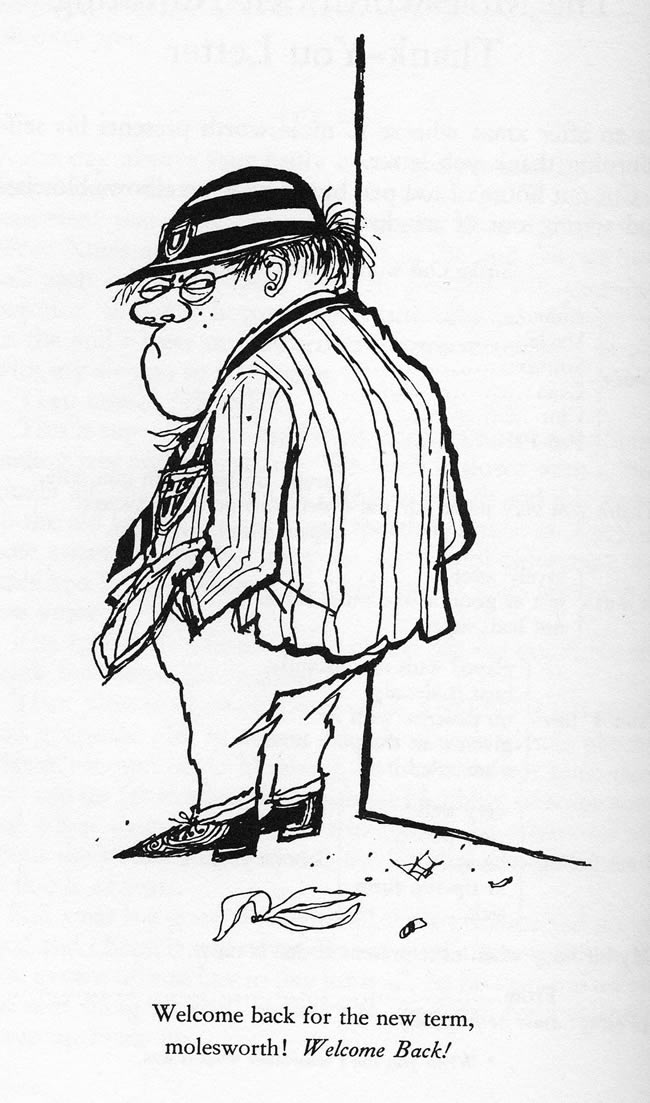
The first “real” book purchased by theDiagonal’s editor with his own money was “How To Be Topp” by Geoffrey Willans and Ronald Searle. The book featured Searle’s unique and unmistakable illustrations of anti-hero Nigel Molesworth, a stoic, shrewd and droll English schoolboy.
Yet while Searle will be best remembered for his drawings of Molesworth and friends at St.Custard’s high school and his invention of St.Trinian’s (school for rowdy schoolgirls), he leaves behind a critical body of work that graphically illustrates his brutal captivity at the hands of the Japanese during the Second World War.
...read moreTuesday, January 3, 2012
Weight Loss and the Coordinated Defense Mechanism

New research into obesity and weight loss shows us why it’s so hard to keep weight lost from dieting from returning. The good news is that weight (re-)gain is not all due to a simple lack of control and laziness. However, the bad news is that keeping one’s weight down may be much more difficult due to the body’s complex defense mechanism.
Tara Parker-Pope over at the Well blog reviews some of the new findings, which seem to point the finger at a group hormones and specific genes that work together to help us regain those lost pounds.
From the New York Times:
Monday, January 2, 2012
Morality and Machines
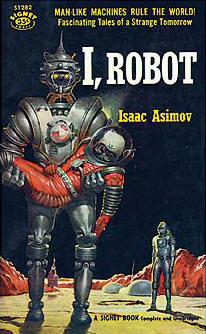
Fans of science fiction and Isaac Asimov in particular may recall his three laws of robotics:
- A robot may not injure a human being or, through inaction, allow a human being to come to harm.
- A robot must obey the orders given to it by human beings, except where such orders would conflict with the First Law.
- A robot must protect its own existence as long as such protection does not conflict with the First or Second Laws.
Of course, technology has marched forward relentlessly since Asimov penned these guidelines in 1942. But while the ideas may seem trite and somewhat contradictory the ethical issue remains – especially as our machines become ever more powerful and independent. Though, perhaps first humans, in general, ought to agree on a set of fundamental principles for themselves.
Colin Allen for the Opinionator column reflects on the moral dilemma. He is Provost Professor of Cognitive Science and History and Philosophy of Science at Indiana University, Bloomington.
...read more