
MondayPoem: Life Cycle of Common Man

Twice Poet Laureate of the United States, Howard Nemerov, catalogs the human condition in his work “Life Cycle of Common Man”.

[div class=attrib]By Howard Nemerov, courtesy of Poetry Foundation:[end-div]

Life Cycle of Common Man

Roughly figured, this man of moderate habits,
This average consumer of the middle class,
Consumed in the course of his average life span
Just under half a million cigarettes,
Four thousand fifths of gin and about
A quarter as much vermouth; he drank
Maybe a hundred thousand cups of coffee,
And counting his parents’ share it cost
Something like half a million dollars
To put him through life. How many beasts
Died to provide him with meat, belt and shoes
Cannot be certainly said.
But anyhow,
It is in this way that a man travels through time,
Leaving behind him a lengthening trail
Of empty bottles and bones, of broken shoes,
Frayed collars and worn out or outgrown
Diapers and dinnerjackets, silk ties and slickers.

Given the energy and security thus achieved,
He did . . . ? What? The usual things, of course,
The eating, dreaming, drinking and begetting,
And he worked for the money which was to pay
For the eating, et cetera, which were necessary
If he were to go on working for the money, et cetera,
But chiefly he talked. As the bottles and bones
Accumulated behind him, the words proceeded
Steadily from the front of his face as he
Advanced into the silence and made it verbal.
Who can tally the tale of his words? A lifetime
Would barely suffice for their repetition;
If you merely printed all his commas the result
Would be a very large volume, and the number of times
He said “thank you” or “very little sugar, please,”
Would stagger the imagination. There were also
Witticisms, platitudes, and statements beginning
“It seems to me” or “As I always say.”
Consider the courage in all that, and behold the man
Walking into deep silence, with the ectoplastic
Cartoon’s balloon of speech proceeding
Steadily out of the front of his face, the words
Borne along on the breath which is his spirit
Telling the numberless tale of his untold Word
Which makes the world his apple, and forces him to eat.

[div class=attrib]Source: The Collected Poems of Howard Nemerov (The University of Chicago Press, 1977).[end-div]

The Prospect of Immortality

A recently opened solo art show takes an fascinating inside peek at the cryonics industry. Entitled “The Prospect of Immortality” the show features photography by Murray Ballard. Ballard’s collection of images follows a 5-year investigation of cryonics in England, the United States and Russia. Cryonics is the practice of freezing the human body just after death in the hope that future science will one day have the capability of restoring it to life.

Ballard presents the topic in a fair an balanced way, leaving viewers to question and weigh the process of cryonics for themselves.

[div class=attrib]From Impressions Gallery:[end-div]

The result of five year’s unprecedented access and international investigation, Murray Ballard offers an amazing photographic insight into the practice of : the process of freezing a human body after death in the hope that scientific advances may one day bring it back to life. Premiering at Impressions Gallery, this is Murray Ballard’s first major solo show.

Ballard’s images take the viewer on a journey through the tiny but dedicated international cryonics community, from the English seaside retirement town of Peacehaven; to the high-tech laboratories of Arizona; to the rudimentary facilities of Kriorus, just outside Moscow.  Worldwide there are approximately 200 ‘patients’ stored permanently in liquid nitrogen, with a further thousand people signed up for cryonics after death.

[div class=attrib]More from theSource here.[end-div]

[div class=attrib]Images courtesy of Impressions Gallery / Murray Ballard.[end-div]

The Science Behind Dreaming

[div class=attrib]From Scientific American:[end-div]

For centuries people have pondered the meaning of dreams. Early civilizations thought of dreams as a medium between our earthly world and that of the gods. In fact, the Greeks and Romans were convinced that dreams had certain prophetic powers. While there has always been a great interest in the interpretation of human dreams, it wasn’t until the end of the nineteenth century that Sigmund Freud and Carl Jung put forth some of the most widely-known modern theories of dreaming. Freud’s theory centred around the notion of repressed longing — the idea that dreaming allows us to sort through unresolved, repressed wishes. Carl Jung (who studied under Freud) also believed that dreams had psychological importance, but proposed different theories about their meaning.

Since then, technological advancements have allowed for the development of other theories. One prominent neurobiological theory of dreaming is the “activation-synthesis hypothesis,” which states that dreams don’t actually mean anything: they are merely electrical brain impulses that pull random thoughts and imagery from our memories. Humans, the theory goes, construct dream stories after they wake up, in a natural attempt to make sense of it all. Yet, given the vast documentation of realistic aspects to human dreaming as well as indirect experimental evidence that other mammals such as cats also dream, evolutionary psychologists have theorized that dreaming really does serve a purpose. In particular, the “threat simulation theory” suggests that dreaming should be seen as an ancient biological defence mechanism that provided an evolutionary advantage because of  its capacity to repeatedly simulate potential threatening events – enhancing the neuro-cognitive mechanisms required for efficient threat perception and avoidance.

So, over the years, numerous theories have been put forth in an attempt to illuminate the mystery behind human dreams, but, until recently, strong tangible evidence has remained largely elusive.

Yet, new research published in the Journal of Neuroscience provides compelling insights into the mechanisms that underlie dreaming and the strong relationship our dreams have with our memories. Cristina Marzano and her colleagues at the University of Rome have succeeded, for the first time, in explaining how humans remember their dreams. The scientists predicted the likelihood of successful dream recall based on a signature pattern of brain waves. In order to do this, the Italian research team invited 65 students to spend two consecutive nights in their research laboratory.

[div class=attrib]More from theSource here.[end-div]

[div class=attrib]Image: The Knight’s Dream by Antonio de Pereda. Courtesy of Wikipedia / Creative Commons.[end-div]

Rate This Article: What’s Wrong with the Culture of Critique

[div class=attrib]From Wired:[end-div]

You don’t have to read this essay to know whether you’ll like it. Just go online and assess how provocative it is by the number of comments at the bottom of the web version. (If you’re already reading the web version, done and done.) To find out whether it has gone viral, check how many people have hit the little thumbs-up, or tweeted about it, or liked it on Facebook, or dug it on Digg. These increasingly ubiquitous mechanisms of assessment have some real advantages: In this case, you could save 10 minutes’ reading time. Unfortunately, life is also getting a little ruined in the process.

A funny thing has quietly accompanied our era’s eye-gouging proliferation of information, and by funny I mean not very funny. For every ocean of new data we generate each hour—videos, blog posts, VRBO listings, MP3s, ebooks, tweets—an attendant ocean’s worth of reviewage follows. The Internet-begotten abundance of absolutely everything has given rise to a parallel universe of stars, rankings, most-recommended lists, and other valuations designed to help us sort the wheat from all the chaff we’re drowning in. I’ve never been to Massimo’s pizzeria in Princeton, New Jersey, but thanks to the Yelpers I can already describe the personality of Big Vince, a man I’ve never met. (And why would I want to? He’s surly and drums his fingers while you order, apparently.) Everything exists to be charted and evaluated, and the charts and evaluations themselves grow more baroque by the day. Was this review helpful to you? We even review our reviews.

Technoculture critic and former Wired contributor Erik Davis is concerned about the proliferation of reviews, too. “Our culture is afflicted with knowingness,” he says. “We exalt in being able to know as much as possible. And that’s great on many levels. But we’re forgetting the pleasures of not knowing. I’m no Luddite, but we’ve started replacing actual experience with someone else’s already digested knowledge.”

Of course, Yelpification of the universe is so thorough as to be invisible. I scarcely blinked the other day when, after a Skype chat with my mother, I was asked to rate the call. (I assumed they were talking about connection quality, but if they want to hear about how Mom still pronounces it noo-cu-lar, I’m happy to share.) That same afternoon, the UPS guy delivered a guitar stand I’d ordered. Even before I could weigh in on the product, or on the seller’s expeditiousness, I was presented with a third assessment opportunity. It was emblazoned on the cardboard box: “Rate this packaging.”

[div class=attrib]More from theSource here.[end-div]

Communicating Meaning in Cyberspace

Clarifying intent, emotion, wishes and meaning is a rather tricky and cumbersome process that we all navigate each day. Online in the digital world this is even more challenging, if not sometimes impossible. The pre-digital method of exchanging information in a social context would have been face-to-face. Such a method provides the full gamut of verbal and non-verbal dialogue between two or more parties. Importantly, it also provides a channel for the exchange of unconscious cues between people, which researchers are increasingly finding to be of critical importance during communication.

So, now replace the the face-to-face interaction with email, texting, instant messaging, video chat, and other forms of digital communication and you have a new playground for researchers in cognitive and social sciences. The intriguing question for researchers, and all of us for that matter, is: how do we ensure our meaning, motivations and intent are expressed clearly through digital communications?

There are some partial answers over at Anthropology in Practice, which looks at how users of digital media express emotion, resolve ambiguity and communicate cross-culturally.

[div class=attrib]Anthropology in Practice:[end-div]

The ability to interpret social data is rooted in our theory of mind—our capacity to attribute mental states (beliefs, intents, desires, knowledge, etc.) to the self and to others. This cognitive development reflects some understanding of how other individuals relate to the world, allowing for the prediction of behaviors.1 As social beings we require consistent and frequent confirmation of our social placement. This confirmation is vital to the preservation of our networks—we need to be able to gauge the state of our relationships with others.

Research has shown that children whose capacity to mentalize is diminished find other ways to successfully interpret nonverbal social and visual cues 2-6, suggesting that the capacity to mentalize is necessary to social life. Digitally-mediated communication, such as text messaging and instant messaging, does not readily permit social biofeedback. However cyber communicators still find ways of conveying beliefs, desires, intent, deceit, and knowledge online, which may reflect an effort to preserve the capacity to mentalize in digital media.

The Challenges of Digitally-Mediated Communication

In its most basic form DMC is text-based, although the growth of video conferencing technology indicates DMC is still evolving. One of the biggest criticisms of DMC has been the lack of nonverbal cues which are an important indicator to the speaker’s meaning, particularly when the message is ambiguous.

Email communicators are all too familiar with this issue. After all, in speech the same statement can have multiple meanings depending on tone, expression, emphasis, inflection, and gesture. Speech conveys not only what is said, but how it is said—and consequently, reveals a bit of the speaker’s mind to interested parties. In a plain-text environment like email only the typist knows whether a statement should be read with sarcasm.

[div class=attrib]More from theSource here.[end-div]

[div class=attrib]Image courtesy of Wikipedia / Creative Commons.[end-div]

The Slow Food – Fast Food Debate

For watchers of the human condition, dissecting and analyzing our food culture is both fascinating and troubling. The global agricultural-industrial complex with its enormous efficiencies and finely engineered end-products, churns out mountains of food stuffs that help feed a significant proportion of the world. And yet, many argue that the same over-refined, highly-processed, preservative-doped, high-fructose enriched, sugar and salt laden, color saturated foods are to blame for many of our modern ills. The catalog of dangers from that box of “fish” sticks, orange “cheese” and twinkies goes something likes this: heart disease, cancer, diabetes, and obesity.

To counterbalance the fast/processed food juggernaut the grassroots International Slow Food movement established its manifesto in 1989. Its stated vision is:

We envision a world in which all people can access and enjoy food that is good for them, good for those who grow it and good for the planet.

They go on to say:

We believe that everyone has a fundamental right to the pleasure of good food and consequently the responsibility to protect the heritage of food, tradition and culture that make this pleasure possible. Our association believes in the concept of neo-gastronomy – recognition of the strong connections between plate, planet, people and culture.

These are lofty ideals. Many would argue that the goals of the Slow Food movement, while worthy, are somewhat elitist and totally impractical in current times on our over-crowded, resource constrained little blue planet.

Krystal D’Costa over at Anthropology in Practice has a fascinating analysis and takes a more pragmatic view.

[div class=attrib]From Krystal D’Costa over at Anthropology in Practice:[end-div]

There’s a sign hanging in my local deli that offers customers some tips on what to expect in terms of quality and service. It reads:

Your order:

Can be fast and good, but it won’t be cheap.
Can be fast and cheap, but it won’t be good.
Can be good and cheap, but it won’t be fast.
Pick two—because you aren’t going to get it good, cheap, and fast.

The Good/Fast/Cheap Model is certainly not new. It’s been a longstanding principle in design, and has been applied to many other things. The idea is a simple one: we can’t have our cake and eat it too. But that doesn’t mean we can’t or won’t try—and no where does this battle rage more fiercely than when it comes to fast food.

In a landscape dominated by golden arches, dollar menus, and value meals serving up to 2,150 calories, fast food has been much maligned. It’s fast, it’s cheap, but we know it’s generally not good for us. And yet, well-touted statistics report that Americans are spending more than ever on fast food:

In 1970, Americans spent about $6 billion on fast food; in 2000, they spent more than $110 billion. Americans now spend more money on fast food than on higher education, personal computers, computer software, or new cars. They spend more on fast food than on movies, books, magazines, newspapers, videos, and recorded music—combined.[i]

With waistlines growing at an alarming rate, fast food has become an easy target. Concern has spurned the emergence of healthier chains (where it’s good and fast, but not cheap), half servings, and posted calorie counts. We talk about awareness and “food prints” enthusiastically, aspire to incorporate more organic produce in our diets, and struggle to encourage others to do the same even while we acknowledge that differing economic means may be a limiting factor.

In short, we long to return to a simpler food time—when local harvests were common and more than adequately provided the sustenance we needed, and we relied less on processed, industrialized foods. We long for a time when home-cooked meals, from scratch, were the norm—and any number of cooking shows on the American airways today work to convince us that it’s easy to do. We’re told to shun fast food, and while it’s true that modern, fast, processed foods represent an extreme in portion size and nutrition, it is also true that our nostalgia is misguided: raw, unprocessed foods—the “natural” that we yearn for—were a challenge for our ancestors. In fact, these foods were downright dangerous.

Step back in time to when fresh meat rotted before it could be consumed and you still consumed it, to when fresh fruits were sour, vegetables were bitter, and when roots and tubers were poisonous. Nature, ever fickle, could withhold her bounty as easily as she could share it: droughts wreaked havoc on produce, storms hampered fishing, cows stopped giving milk, and hens stopped laying.[ii] What would you do then?

[div class=attrib]More from theSource here.[end-div]

[div class=attrib]Images courtesy of International Slow Food Movement / Fred Meyer store by lyzadanger.[end-div]

Graduate Job Picture

Encouraging news for the class 0f 2011. The National Association of Colleges and Employers (NACE) released results from a recent survey showing a slightly improved job picture for 2011 college graduates.

[div class=attrib]From Course Hero:[end-div]

[div class=attrib]More from theSource here.[end-div]

QR Codes as Art

It’s only a matter of time before someone has a cool looking QR code tattooed to their eyelid.

A QR or Quick Response code is a two-dimensional matrix that looks like a scrambled barcode, and behaves much like one, with one important difference. The QR code exhibits a rather high level of tolerance for errors. Some have reported that up to 20-30 percent of the QR code can be selectively altered without affecting its ability to be scanned correctly. Try scanning a regular barcode that has some lines missing or has been altered and your scanner is likely to give you a warning beep. The QR code however still scans correctly even if specific areas are missing or changed. This is important because a QR code does not require a high-end, dedicated barcode scanner for it to be scanned, and therefore also makes it suitable for outdoor use.

A QR code can be scanned, actually photographed, with a regular smartphone (or other device) equipped with a camera and QR code reading app. This makes it possible for QR codes to take up residence anywhere, not just on product packages, and scanned by anyone with a smartphone. In fact you may have seen QR codes displayed on street corners, posters, doors, billboards, websites, vehicles and magazines.

Of course, once you snap a picture of a code, your smartphone app will deliver more details about the object on which the QR code resides. For instance, take a picture of a code placed on a billboard advertising a new BMW model, and you’ll be linked to the BMW website with special promotions for your region. QR codes not only link to websites, but also can be used to send pre-defined text messages, provide further textual information, and deliver location maps.

Since parts of a QR code can be changed without reducing its ability to be scanned correctly, artists and designers now have the leeway to customize the matrix with some creative results.

Some favorites below.

[div]Images courtesy of Duncan Robertson, BBC; Louis Vuitton, SET; Ayara Thai Cuisine Restaurant.[end-div]


The science behind disgust

[div class=attrib]From Salon:[end-div]

We all have things that disgust us irrationally, whether it be cockroaches or chitterlings or cotton balls. For me, it’s fruit soda. It started when I was 3; my mom offered me a can of Sunkist after inner ear surgery. Still woozy from the anesthesia, I gulped it down, and by the time we made it to the cashier, all of it managed to come back up. Although it is nearly 30 years later, just the smell of this “fun, sun and the beach” drink is enough to turn my stomach.

But what, exactly, happens when we feel disgust? As Daniel Kelly, an assistant professor of philosophy at Purdue University, explains in his new book, “Yuck!: The Nature and Moral Significance of Disgust,” it’s not just a physical sensation, it’s a powerful emotional warning sign. Although disgust initially helped keep us away from rotting food and contagious disease, the defense mechanism changed over time to effect the distance we keep from one another. When allowed to play a role in the creation of social policy, Kelly argues, disgust might actually cause more harm than good.

Salon spoke with Kelly about hiding the science behind disgust, why we’re captivated by things we find revolting, and how it can be a very dangerous thing.

What exactly is disgust?

Simply speaking, disgust is the response we have to things we find repulsive. Some of the things that trigger disgust are innate, like the smell of sewage on a hot summer day. No one has to teach you to feel disgusted by garbage, you just are. Other things that are automatically disgusting are rotting food and visible cues of infection or illness. We have this base layer of core disgusting things, and a lot of them don’t seem like they’re learned.

[div class=attrib]More from theSource here.[end-div]

If Televisions Could See Us

A fascinating and disturbing series of still photographs from Andris Feldmanis shows us what the television “sees” as its viewers glare seemingly mindlessly at the box. As Feldmanis describes,

An average person in Estonia spends several hours a day watching the television. This is the situation reversed, the people portrayed here are posing for their television sets. It is not a critique of mass media and its influence, it is a fictional document of what the TV sees.

Makes one wonder what the viewers were watching. Or does it even matter? More of the series courtesy of Art Fag City, here. All the images show the one-sidedness of the human-television relationship.

[div class=attrib]Image courtesy of Andris Feldmanis.[end-div]

Dawn Over Vesta

More precisely NASA’s Dawn spacecraft entered into orbit around the asteroid Vesta on July 15, 2011. Vesta is the second largest of our solar system’s asteroids and is located in the asteroid belt between Mars and Jupiter.
Now that Dawn is safely in orbit, the spacecraft will circle about 10,000 miles above Vesta’s surface for a year and use two different cameras, a gamma-ray detector and a neutron detector, to study the asteroid.

Then in July 2012, Dawn will depart for a visit to Vesta’s close neighbor and largest object in the asteroid belt, Ceres.

The image of Vesta above was taken from a distance of about 9,500 miles (15,000 kilometers) away.

[div class=attrib]Image courtesy of NASA/JPL-Caltech/UCLA/MPS/DLR/IDA.[end-div]

Mr.Carrier, Thanks for Inventing the Air Conditioner

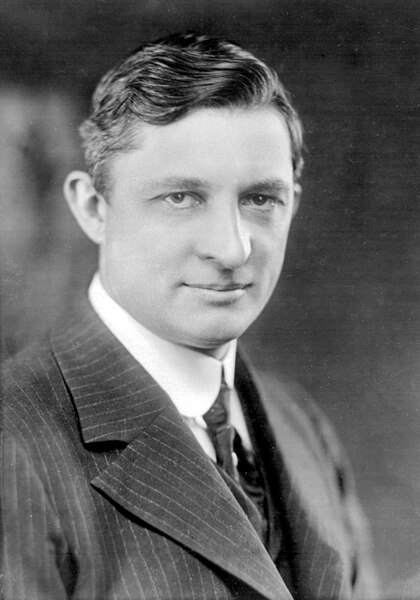
It’s #$% hot in the southern plains of the United States, with high temperatures constantly above 100 degrees F, and lows never dipping below 80. For that matter, it’s hotter than average this year in most parts of the country. So, a timely article over at Slate gives a great overview of the history of the air conditioning system, courtesy of inventor Willis Carrier.

[div class=attrib]From Slate:[end-div]

Anyone tempted to yearn for a simpler time must reckon with a few undeniable unpleasantries of life before modern technology: abscessed teeth, chamber pots, the bubonic plague—and a lack of air conditioning in late July. As temperatures rise into the triple digits across the eastern United States, it’s worth remembering how we arrived at the climate-controlled summer environments we have today.

Until the 20th century, Americans dealt with the hot weather as many still do around the world: They sweated and fanned themselves. Primitive air-conditioning systems have existed since ancient times, but in most cases, these were so costly and inefficient as to preclude their use by any but the wealthiest people. In the United States, things began to change in the early 1900s, when the first electric fans appeared in homes. But cooling units have only spread beyond American borders in the last couple of decades, with the confluence of a rising global middle class and breakthroughs in energy-efficient technology. . . .

The big breakthrough, of course, was electricity. Nikola Tesla’s development of alternating current motors made possible the invention of oscillating fans in the early 20th century. And in 1902, a 25-year-old engineer from New York named Willis Carrier invented the first modern air-conditioning system. The mechanical unit, which sent air through water-cooled coils, was not aimed at human comfort, however; it was designed to control humidity in the printing plant where he worked.

[div class=attrib]More from theSource here.[end-div]

[div class=attrib]Image of Willis Carrier courtesy of Wikipedia / Creative Commons.[end-div]

Seven Sisters Star Cluster

The Seven Sisters star cluster, also known as the Pleiades, consists of many, young, bright and hot stars. While the cluster contains hundreds of stars it is so named because only seven are typically visible to the naked eye. The Seven Sisters is visible from the northern hemisphere, and resides in the constellation Taurus.

[div class=attrib]Image and supporting text courtesy of Davide De Martin over at Skyfactory.[end-div]

This image is a composite from black and white images taken with the Palomar Observatory’s 48-inch (1.2-meter) Samuel Oschin Telescope as a part of the second National Geographic Palomar Observatory Sky Survey (POSS II). The images were recorded on two type of glass photographic plates – one sensitive to red light and the other to blue and later they were digitized. Credit: Caltech, Palomar Observatory, Digitized Sky Survey.

In order to produce the color image seen here, I worked with data coming from 2 different photographic plates taken in 1986 and 1989. Original file is 10.252 x 9.735 pixels with a resolution of about 1 arcsec per pixel. The image shows an area of sky large 2,7° x 2,7° (for comparison, the full-Moon is about 0,5° in diameter).

[div class=attrib]More from theSource here.[end-div]

MondayPoem: Starlight

Monday’s poem authored by William Meredith, was selected for it is in keeping with our cosmology theme this week.

William Meredith was born in New York City in 1919. He studied English at Princeton University where he graduated Magna Cum Laude. His senior thesis focused on the poetry of Robert Frost, a major influence for Meredith throughout his career.
[div class=attrib]By William Meredith, courtesy of Poets.org:[end-div]

Going abruptly into a starry night
It is ignorance we blink from, dark, unhoused;
There is a gaze of animal delight
Before the human vision. Then, aroused
To nebulous danger, we may look for easy stars,
Orion and the Dipper; but they are not ours,

These learned fields. Dark and ignorant,
Unable to see here what our forebears saw,
We keep some fear of random firmament
Vestigial in us. And we think, Ah,
If I had lived then, when these stories were made up, I
Could have found more likely pictures in haphazard sky.

But this is not so. Indeed, we have proved fools
When it comes to myths and images. A few
Old bestiaries, pantheons and tools
Translated to the heavens years ago—
Scales and hunter, goat and horologe—are all
That save us when, time and again, our systems fall.

And what would we do, given a fresh sky
And our dearth of image? Our fears, our few beliefs
Do not have shapes. They are like that astral way
We have called milky, vague stars and star-reefs
That were shapeless even to the fecund eye of myth—
Surely these are no forms to start a zodiac with.

To keep the sky free of luxurious shapes
Is an occupation for most of us, the mind
Free of luxurious thoughts. If we choose to escape,
What venial constellations will unwind
Around a point of light, and then cannot be found
Another night or by another man or from other ground.

As for me, I would find faces there,
Or perhaps one face I have long taken for guide;
Far-fetched, maybe, like Cygnus, but as fair,
And a constellation anyone could read
Once it was pointed out; an enlightenment of night,
The way the pronoun you will turn dark verses bright.

And You Thought Being Direct and Precise Was Good

A new psychological study upends our understanding of the benefits of direct and precise information as a motivational tool. Results from the study by Himanshu Mishra and Baba Shiv describe the cognitive benefits of vague and inarticulate feedback over precise information. At first glance this seems to be counter-intuitive. After all, fuzzy math, blurred reasoning and unclear directives would seem to be the banes of current societal norms that value data in as a precise a form as possible. We measure, calibrate, verify and re-measure and report information to the nth degree.

[div class=attrib]Stanford Business:[end-div]

Want to lose weight in 2011? You’ve got a better chance of pulling it off if you tell yourself, “I’d like to slim down and maybe lose somewhere between 5 and 15 pounds this year” instead of, “I’d like to lose 12 pounds by July 4.”

In a paper to be published in an upcoming issue of the journal Psychological Science, business school Professor Baba Shiv concludes that people are more likely to stay motivated and achieve a goal if it’s sketched out in vague terms than if it’s set in stone as a rigid or precise plan.

“For one to be successful, one needs to be motivated,” says Shiv, the Stanford Graduate School of Business Sanwa Bank, Limited, Professor of Marketing. He is coauthor of the paper “In Praise of Vagueness: Malleability of Vague Information as a Performance Booster” with Himanshu Mishra and Arul Mishra, both of the University of Utah. Presenting information in a vague way — for instance using numerical ranges or qualitative descriptions — “allows you to sample from the information that’s in your favor,” says Shiv, whose research includes studying people’s responses to incentives. “You’re sampling and can pick the part you want,” the part that seems achievable or encourages you to keep your expectations upbeat to stay on track, says Shiv.

By comparison, information presented in a more-precise form doesn’t let you view it in a rosy light and so can be discouraging. For instance, Shiv says, a coach could try to motivate a sprinter by reviewing all her past times, recorded down to the thousandths of a second. That would remind her of her good times but also the poor ones, potentially de-motivating her. Or, the coach could give the athlete less-precise but still-accurate qualitative information. “Good coaches get people not to focus on the times but on a dimension that is malleable,” says Shiv. “They’ll say, “You’re mentally tough.’ You can’t measure that.” The runner can then zero in on her mental strength to help her concentrate on her best past performances, boosting her motivation and ultimately improving her times. “She’s cherry-picking her memories, and that’s okay, because that’s allowing her to get motivated,” says Shiv.

Of course, Shiv isn’t saying there’s no place for precise information. A pilot needs exact data to monitor a plane’s location, direction, and fuel levels, for instance. But information meant to motivate is different, and people seeking motivation need the chance to focus on just the positive. When it comes to motivation, Shiv said, “negative information outweighs positive. If I give you five pieces of negative information and five pieces of positive information, the brain weighs the negative far more than the positive … It’s a survival mechanism. The brain weighs the negative to keep us secure.”

[div class=attrib]More from theSource here.[end-div]


Answers to Life’s Big Questions

Do you gulp Pepsi or Coke? Are you a Mac or a PC? Do you side with MSNBC or Fox News? Do you sip tea or coffee? Do you prefer thin crust or deep pan pizza.

Hunch has compiled a telling infographic compiled from millions of answers gathered via its online Teach Hunch About You (THAY) questions. Interestingly, it looks like 61 percent of respondents are “dog people” and 31 percent “cat people” (with 8 percent neither).

[div class=attrib]From Hunch:[end-div]

[div class=attrib]More from theSource here.[end-div]

Morality 1: Good without gods

[div class=attrib]From QualiaSoup:[end-div]

Some people claim that morality is dependent upon religion, that atheists cannot possibly be moral since god and morality are intertwined (well, in their minds). Unfortunately, this is one way that religious people dehumanise atheists who have a logical way of thinking about what constitutes moral social behaviour. More than simply being a (incorrect) definition in the Oxford dictionary, morality is actually the main subject of many philosophers’ intellectual lives. This video, the first of a multi-part series, begins this discussion by defining morality and then moving on to look at six hypothetical cultures’ and their beliefs.

[tube]T7xt5LtgsxQ[/tube]

Art Makes Your Body Tingle

The next time you wander through an art gallery and feel lightheaded after seeing a Monroe silkscreen by Warhol, or feel reflective and soothed by a scene from Monet’s garden you’ll be in good company. New research shows that the body reacts to art not just our grey matter.

The study by Wolfgang Tschacher and colleagues, and published by the American Psychological Association, found that:

. . . physiological responses during perception of an artwork were significantly related to aesthetic-emotional experiencing. The dimensions “Aesthetic Quality,” “Surprise/Humor,” “Dominance,” and “Curatorial Quality” were associated with cardiac measures (heart rate variability, heart rate level) and skin conductance variability.

In other words, art makes your pulse race, your skin perspire and your body tingle.

[div class=attrib]From Miller-McCune:[end-div]

Art exhibits are not generally thought of as opportunities to get our pulses racing and skin tingling. But newly published research suggests aesthetic appreciation is, in fact, a full-body experience.

Three hundred and seventy-three visitors to a Swiss museum agreed to wear special gloves measuring four physiological responses as they strolled through an art exhibit. Researchers found an association between the gallery-goers’ reported responses to the artworks and three of the four measurements of bodily stimulation.

“Our findings suggest that an idiosyncratically human property — finding aesthetic pleasure in viewing artistic artifacts — is linked to biological markers,” researchers led by psychologist Wolfgang Tschacher of the University of Bern, Switzerland, write in the journal Psychology of Aesthetics, Creativity and the Arts.

Their study, the first of its kind conducted in an actual art gallery, provides evidence for what Tschacher and his colleagues call “the embodiment of aesthetics.”

[div class=attrib]More from theSource here.[end-div]

[div class=attrib]Image courtesy of Wikipedia / Creative Commons.[end-div]

Favela Futurism, Very Chic

[div class=attrib]From BigThink:[end-div]

The future of global innovation is the Brazilian favela, the Mumbai slum and the Nairobi shanty-town. At a time when countries across the world, from Latin America to Africa to Asia, are producing new mega-slums on an epic scale, when emerging mega-cities in China are pushing the limits of urban infrastructure by adding millions of new inhabitants each year, it is becoming increasingly likely that the lowly favela, slum or ghetto may hold the key to the future of human development.

Back in 2009, futurist and science fiction writer Bruce Sterling first introduced Favela Chic as a way of thinking about our modern world. What is favela chic? It’s what happens “when you’ve lost everything materially… but are wired to the gills and are big on Facebook.” Favela chic doesn’t have to be exclusively an emerging market notion, either. As Sterling has noted, it can be a hastily thrown-together high-rise in downtown Miami, covered over with weeds, without any indoor plumbing, filled with squatters.

Flash forward to the end of 2010, when the World Future Society named favela innovation one of the Top 10 trends to watch in 2011: “Dwellers of slums, favelas, and ghettos have learned to use and reuse resources and commodities more efficiently than their wealthier counterparts. The neighborhoods are high-density and walkable, mixing commercial and residential areas rather than segregating these functions. In many of these informal cities, participants play a role in communal commercial endeavors such as growing food or raising livestock.”

What’s fascinating is that the online digital communities we are busy creating in “developed” nations more closely resemble favelas than they do carefully planned urban cities. They are messy, emergent and always in beta. With few exceptions, there are no civil rights and no effective ways to organize. When asked how to define favela chic at this year’s SXSW event in Austin, Sterling referred to Facebook as the poster child of a digital favela. It’s thrown-up, in permanent beta, and easily disposed of quickly. Apps and social games are the corrugated steel of our digital shanty-towns.

[div class=attrib]More from theSource here.[end-div]

Just Another Week at Fermilab

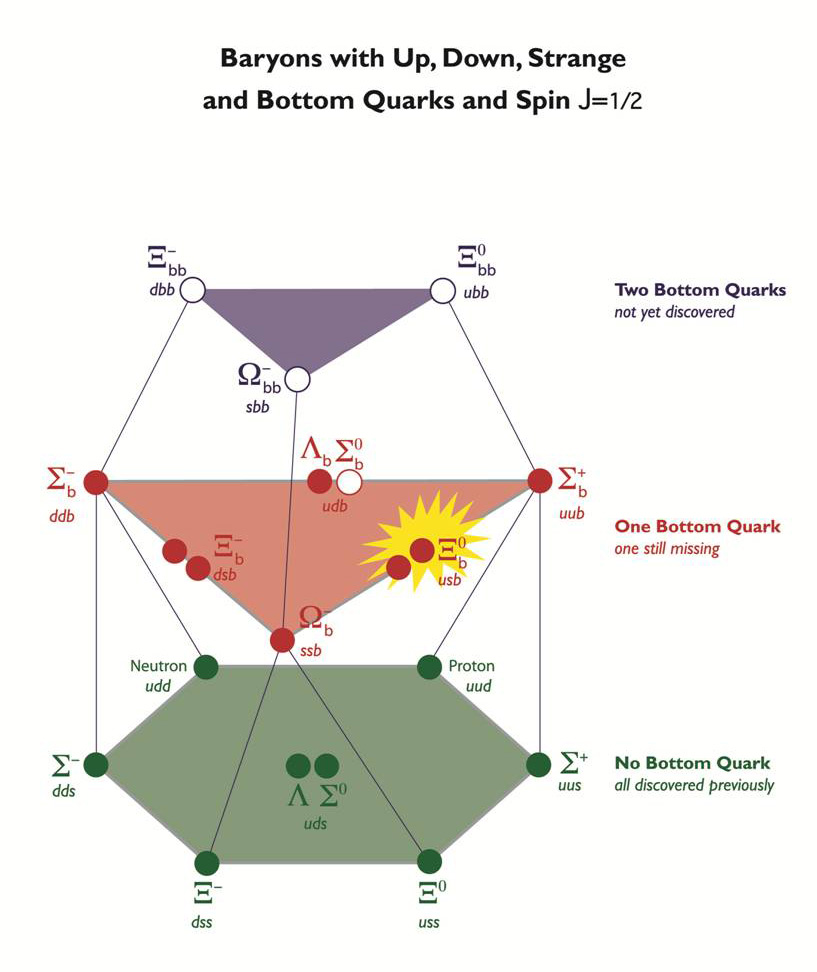
Another day, another particle, courtesy of scientists at Fermilab. The CDF group working with data from Fermilab’s Tevatron particle collider announced the finding of a new, neutron-like particle last week. The particle known as a neutral Xi-sub-b is a heavy relative of the neutron and is made up of a strange quark, an up quark and a bottom quark, hence the “s-u-b” moniker.

[div class=attrib]Here’s more from Symmetry Breaking:[end-div]

While its existence was predicted by the Standard Model, the observation of the neutral Xi-sub-b is significant because it strengthens our understanding of how quarks form matter. Fermilab physicist Pat Lukens, a member of the CDF collaboration, presented the discovery at Fermilab on Wednesday, July 20.

The neutral Xi-sub-b is the latest entry in the periodic table of baryons. Baryons are particles formed of three quarks, the most common examples being the proton (two up quarks and a down quark) and the neutron (two down quarks and an up quark). The neutral Xi-sub-b belongs to the family of bottom baryons, which are about six times heavier than the proton and neutron because they all contain a heavy bottom quark. The particles are produced only in high-energy collisions, and are rare and very difficult to observe.

Although Fermilab’s Tevatron particle collider is not a dedicated bottom quark factory, sophisticated particle detectors and trillions of proton-antiproton collisions have made it a haven for discovering and studying almost all of the known bottom baryons. Experiments at the Tevatron discovered the Sigma-sub-b baryons (?b and ?b*) in 2006, observed the Xi-b-minus baryon (?b) in 2007, and found the Omega-sub-b (?b) in 2009.

[div class=attrib]Image courtesy of Fermilab/CDF Collaboration.[end-div]

Bad reasoning about reasoning

[div class=attrib]By Massimo Pigliucci at Rationally Speaking:[end-div]

A recent paper on the evolutionary psychology of reasoning has made mainstream news, with extensive coverage by the New York Times, among others. Too bad the “research” is badly flawed, and the lesson drawn by Patricia Cohen’s commentary in the Times is precisely the wrong one.

Readers of this blog and listeners to our podcast know very well that I tend to be pretty skeptical of evolutionary psychology in general. The reason isn’t because there is anything inherently wrong about thinking that (some) human behavioral traits evolved in response to natural selection. That’s just an uncontroversial consequence of standard evolutionary theory. The devil, rather, is in the details: it is next to impossible to test specific evopsych hypotheses because the crucial data are often missing. The fossil record hardly helps (if we are talking about behavior), there are precious few closely related species for comparison (and they are not at all that closely related), and the current ecological-social environment is very different from the “ERE,” the Evolutionarily Relevant Environment (which means that measuring selection on a given trait in today’s humans is pretty much irrelevant).
That said, I was curious about Hugo Mercier and Dan Sperber’s paper, “Why do humans reason? Arguments for an argumentative theory,” published in Behavioral and Brain Sciences (volume 34, pp. 57-111, 2011), which is accompanied by an extensive peer commentary. My curiosity was piqued in particular because of the Times’ headline from the June 14 article: “Reason Seen More as Weapon Than Path to Truth.” Oh crap, I thought.

Mercier and Sperber’s basic argument is that reason did not evolve to allow us to seek truth, but rather to win arguments with our fellow human beings. We are natural lawyers, not natural philosophers. This, according to them, explains why people are so bad at reasoning, for instance why we tend to fall for basic mistakes such as the well known confirmation bias — a tendency to seek evidence in favor of one’s position and discount contrary evidence that is well on display in politics and pseudoscience. (One could immediately raise the obvious “so what?” objection to all of this: language possibly evolved to coordinate hunting and gossip about your neighbor. That doesn’t mean we can’t take writing and speaking courses and dramatically improve on our given endowment, natural selection be damned.)

The first substantive thing to notice about the paper is that there isn’t a single new datum to back up the central hypothesis. It is one (long) argument in which the authors review well known cognitive science literature and simply apply evopsych speculation to it. If that’s the way to get into the New York Times, I better increase my speculation quotient.

[div class=attrib]More from theSource here.[end-div]

Higgs Particle Collides with Modern Art

Jonathan Jones over at the Guardian puts an creative spin (pun intended) on the latest developments in the world of particle physics. He suggests that we might borrow from the world of modern and contemporary art to help us take the vast imaginative leaps necessary to understand our physical world and its underlying quantum mechanical nature bound up in uncertainty and paradox.

Jones makes a good point that many leading artists of recent times broke new ground by presenting us with an alternate reality that demanded a fresh perspective of the world and what lies beneath. Think Picasso and Dali and Miro and Twombly.

[div class=attrib]From Jonathan Jones for the Guardian:[end-div]

The experiments currently being performed in the LHC are enigmatic, mind-boggling and imaginative. But are they science – or art? In his renowned television series The Ascent of Man, the polymath Jacob Bronowski called the discovery of the invisible world within the atom the great collective achievement of science in the 20th century. Then he went further. “No – it is a great, collective work of art.”

Niels Bohr, who was at the heart of the new sub-atomic physics in the early 20th century, put the mystery of what he and others were finding into provocative sayings. He was very quotable, and every quote stresses the ambiguity of the new realm he was opening up, the realm of the smallest conceivable things in the universe. “If quantum mechanics hasn’t profoundly shocked you, you haven’t understood it yet,” ran one of his remarks. According to Bronowski, Bohr also said that to think about the paradoxical truths of quantum mechanics is to think in images, because the only way to know anything about the invisible is to create an image of it that is by definition a human construct, a model, a half-truth trying to hint at the real truth.

. . .

We won’t understand what those guys at Cern are up to until our idea of science catches up with the greatest minds of the 20th century who blew apart all previous conventions of thought. One guide offers itself to those of us who are not physicists: modern art. Bohr, explained Bronowski, collected Cubist paintings. Cubism was invented by Pablo Picasso and Georges Braque at the same time modern physics was being created: its crystalline structures and opaque surfaces suggest the astonishment of a reality whose every microcosmic particle is sublimely complex.

[div class=attrib]More from theSource here.[end-div]

[div class=attrib]Image courtesy of Wikipedia / CERN / Creative Commons.[end-div]

Rechargeable Nanotube-Based Solar Energy Storage

[div class=attrib]From Ars Technica:[end-div]

Since the 1970s, chemists have worked on storing solar energy in molecules that change state in response to light. These photoactive molecules could be the ideal solar fuel, as the right material should be transportable, affordable, and rechargeable. Unfortunately, scientists haven’t had much success.

One of the best examples in recent years, tetracarbonly-diruthenium fulvalene, requires the use of ruthenium, which is rare and expensive. Furthermore, the ruthenium compound has a volumetric energy density (watt-hours per liter) that is several times smaller than that of a standard lithium-ion battery.
Alexie Kolpak and Jeffrey Grossman from the Massachusetts Institute of Technology propose a new type of solar thermal fuel that would be affordable, rechargeable, thermally stable, and more energy-dense than lithium-ion batteries. Their proposed design combines an organic photoactive molecule, azobenzene, with the ever-popular carbon nanotube.

Before we get into the details of their proposal, we’ll quickly go over how photoactive molecules store solar energy. When a photoactive molecule absorbs sunlight, it undergoes a conformational change, moving from the ground energy state into a higher energy state. The higher energy state is metastable (stable for the moment, but highly susceptible to energy loss), so a trigger—voltage, heat, light, etc.—will cause the molecule to fall back to the ground state. The energy difference between the higher energy state and the ground state (termed ?H) is then discharged. A useful photoactive molecule will be able to go through numerous cycles of charging and discharging.

The challenge in making a solar thermal fuel is finding a material that will have both a large ?H and large activation energy. The two factors are not always compatible. To have a large ?H, you want a big energy difference between the ground and higher energy state. But you don’t want the higher energy state to be too energetic, as it would be unstable. Instability means that the fuel will have a small activation energy and be prone to discharging its stored energy too easily.

Kolpak and Grossman managed to find the right balance between ?H and activation energy when they examined computational models of azobenzene (azo) bound to carbon nanotubes (CNT) in azo/CNT nanostructures.

[div class=attrib]More from theSource here.[end-div]

Postcards from the Atomic Age

Remember the lowly tourist postcard? Undoubtedly, you will have sent one or two “Wish you where here!” missives to your parents or work colleagues while vacationing in the Caribbean or hiking in Austria. Or, you may still have some in a desk drawer. Remember, those that you never mailed because you had neither time or local currency to purchase a stamp. If not, someone in your extended family surely has a collection of old postcards with strangely saturated and slightly off-kilter colors, chronicling family travels to interesting and not-so-interesting places.

Then, there are postcards of a different kind, sent from places that wouldn’t normally spring to mind as departure points for a quick and trivial dispatch. Tom Vanderbilt over at Slate introduces us to a new book, Atomic Postcards:

“Having a great time,” reads the archetypical postcard. “Wish you were here.” But what about when the “here” is the blasted, irradiated wastes of Frenchman’s Flat, in the Nevada desert? Or the site of America’s worst nuclear disaster? John O’Brian and Jeremy Borsos’ new book, Atomic Postcards, fuses the almost inherently banal form of the canned tourist dispatch with the incipient peril, and nervously giddy promise, of the nuclear age. Collected within are two-sided curios spanning the vast range of the military-industrial complex—”radioactive messages from the Cold War,” as the book promises. They depict everything from haunting afterimages of atomic incineration on the Nagasaki streets to achingly prosaic sales materials from atomic suppliers to a gauzy homage to the “first atomic research reactor in Israel,” a concrete monolith jutting from the sand, looking at once futuristic and ancient. Taken as a whole, the postcards form a kind of de facto and largely cheery dissemination campaign for the wonder of atomic power (and weapons). And who’s to mind if that sunny tropical beach is flecked with radionuclides?

[div class=attrib]More from theSource here.[end-div]

[div class=attrib]Image: Marshall Islands, 1955. Image courtesy of Atomic Postcards.[end-div]

“Spectacular nuclear explosion” reads a caption on the back (or “verso,” as postcard geeks would say) of this card—released by “Ray Helberg’s Pacific Service”—of a test in the Marshall Islands. The disembodied cloud—a ferocious water funnel of water thrust upward, spreading into a toroid of vapor—recalls a Dutch sea painting with something new and alien in its center. “Quite a site [sic] to watch,” reads a laconic comment on the back. Outside the frame of the stylized blast cloud are its consequences. As Nathan Hodge and Sharon Weinberg write in Nuclear Family Vacation, “[F]or the people of the Marshall Islands, the consequences of atomic testing in the Pacific were extraordinary. Traditional communities were displaced by the tests; prolonged exposure to radiation created a legacy of illness and disease.”

Is Anyone There?

[div class=attrib]From the New York Times:[end-div]
“WHEN people don’t answer my e-mails, I always think maybe something tragic happened,” said John Leguizamo, the writer and performer, whose first marriage ended when his wife asked him by e-mail for a divorce. “Like maybe they got hit by a meteorite.”

Betsy Rapoport, an editor and life coach, said: “I don’t believe I have ever received an answer from any e-mail I’ve ever sent my children, now 21 and 18. Unless you count ‘idk’ as a response.”

The British linguist David Crystal said that his wife recently got a reply to an e-mail she sent in 2006. “It was like getting a postcard from the Second World War,” he said.

The roaring silence. The pause that does not refresh. The world is full of examples of how the anonymity and remove of the Internet cause us to write and post things that we later regret. But what of the way that anonymity and remove sometimes leave us dangling like a cartoon character that has run off a cliff?

For every fiery screed or gushy, tear-streaked confession in the ethersphere, it seems there’s a big patch of grainy, unresolved black. Though it would comfort us to think that these long silences are the product of technical failure or mishap, the more likely culprits are lack of courtesy and passive aggression.

“The Internet is something very informal that happened to a society that was already very informal,” said P. M. Forni, an etiquette expert and the author of “Choosing Civility.” “We can get away with murder, so to speak. The endless amount of people we can contact means we are not as cautious or kind as we might be. Consciously or unconsciously we think of our interlocutors as disposable or replaceable.”

Judith Kallos, who runs a site on Internet etiquette called netmanners.com, said the No. 1 complaint is that “people feel they’re being ignored.”

[div class=attrib]More from theSource here.[end-div]

The five top regrets of dying people

Social scientists may have already examined the cross-cultural regrets of those nearing end of life. If not, it would make fascinating reading to explore the differences and similarities. However, despite the many traits and beliefs that divide humanity, it’s likely that many of these are common.

[div class=attrib]By Massimo Pigliucci at Rationally Speaking:[end-div]

Bronnie Ware is the author (a bit too much on the mystical-touchy-feely side for my taste) of the blog “Inspiration and Chai” (QED). But she has also worked for years in palliative care, thereby having the life-altering experience of sharing people’s last few weeks and listening to what they regretted the most about their now about to end lives. The result is this list of “top five” things people wished they had done differently:

1. I wish I’d had the courage to live a life true to myself, not the life others expected of me.
2. I wish I didn’t work so hard.
3. I wish I’d had the courage to express my feelings.
4. I wish I had stayed in touch with my friends.
5. I wish that I had let myself be happier.

This is, of course, anecdotal evidence from a single source, and as such it needs to be taken with a rather large grain of salt. But it is hard to read the list and not begin reflecting on your own life — even if you are (hopefully!) very far from the end.

Ware’s list, of course, is precisely why Socrates famously said that “the unexamined life is not worth living” (in Apology 38a, Plato’s rendition of Socrates’ speech at his trial), and why Aristotle considered the quest for eudaimonia (flourishing) a life-long commitment the success of which can be assessed only at the very end.

Let’s then briefly consider the list and see what we can learn from it. Beginning with the first entry, I’m not sure what it means for someone to be true to oneself, but I take it that the notion attempts to get at the fact that too many of us cave to societal forces early on and do not actually follow our aspirations. The practicalities of life have a way of imposing themselves on us, beginning with parental pressure to enter a remunerative career path and continuing with the fact that no matter what your vocation is you still have to somehow pay the bills and put dinner on the table every evening. And yet, you wouldn’t believe the number of people I’ve met in recent years who — about midway through their expected lifespan — suddenly decided that what they had been doing with their lives during the previous couple of decades was somewhat empty and needed to change. Almost without exception, these friends in their late ‘30s or early ‘40s contemplated — and many actually followed through — going back to (graduate) school and preparing for a new career in areas that they felt augmented the meaningfulness of their lives (often, but not always, that meant teaching). One could argue that such self-examination should have occurred much earlier, but we are often badly equipped, in terms of both education and life experience, to ask ourselves that sort of question when we are entering college. Better midway than at the end, though…

[div class=attrib]More from theSource here.[end-div]

Atomic Poems: Oppenheimer, Ginsberg and Linkin Park

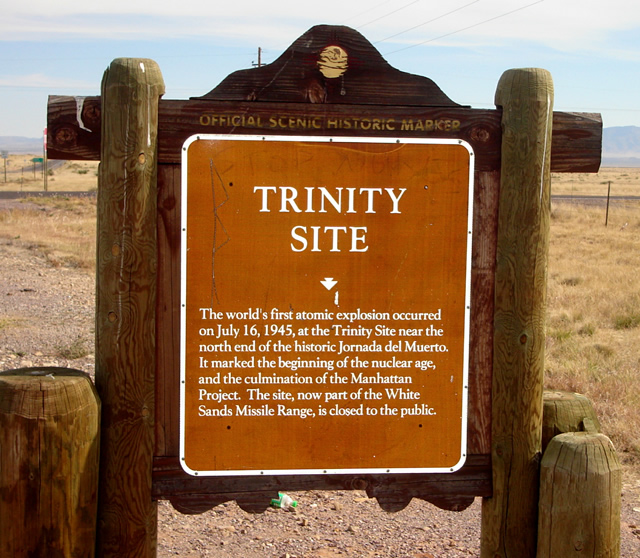
Sixty-six years ago on July 16, 1945 the world witnessed the first atomic bomb test. The bomb lit up the sky and scorched the earth at the White Sands Proving Ground over the Jornada del Muerto desert in New Mexico. The test of the implosion-design plutonium device was codenamed Trinity, part of the Manhattan Project.

The lead physicist was J. Robert Oppenheimer. He named the atomic test “Trinity” in a conflicted homage to John Donne’s poem, “Holy Sonnet XIV: Batter My Heart, Three-Personed God”:

[div class=attrib]By John Donne:[end-div]

Batter my heart, three-personed God; for you
As yet but knock, breathe, shine, and seek to mend;
That I may rise and stand, o’erthrow me, and bend
Your force to break, blow, burn, and make me new.
I, like an usurped town, to another due,
Labor to admit you, but O, to no end;
Reason, your viceroy in me, me should defend,
but is captived, and proves weak or untrue.
yet dearly I love you, and would be loved fain,
But am betrothed unto your enemy.
Divorce me, untie or break that knot again;
Take me to you, imprison me, for I,
Except you enthrall me, never shall be free,
Nor even chaste, except you ravish me.

Thirty-three years after the Trinity test on July 16, 1978, poet Allen Ginsberg published his nuclear protest poem “Plutonian Ode”, excerpted here:

. . .

Radioactive Nemesis were you there at the beginning 
        black dumb tongueless unsmelling blast of Disil-
        lusion?
I manifest your Baptismal Word after four billion years
I guess your birthday in Earthling Night, I salute your
        dreadful presence last majestic as the Gods,
Sabaot, Jehova, Astapheus, Adonaeus, Elohim, Iao, 
        Ialdabaoth, Aeon from Aeon born ignorant in an
        Abyss of Light,
Sophia's reflections glittering thoughtful galaxies, whirl-
        pools of starspume silver-thin as hairs of Einstein!
Father Whitman I celebrate a matter that renders Self
        oblivion!
Grand Subject that annihilates inky hands & pages'
        prayers, old orators' inspired Immortalities,
I begin your chant, openmouthed exhaling into spacious
        sky over silent mills at Hanford, Savannah River,
        Rocky Flats, Pantex, Burlington, Albuquerque
I yell thru Washington, South Carolina, Colorado, 
        Texas, Iowa, New Mexico,
Where nuclear reactors creat a new Thing under the 
        Sun, where Rockwell war-plants fabricate this death
        stuff trigger in nitrogen baths,
Hanger-Silas Mason assembles the terrified weapon
        secret by ten thousands, & where Manzano Moun-
        tain boasts to store
its dreadful decay through two hundred forty millenia
        while our Galaxy spirals around its nebulous core.
I enter your secret places with my mind, I speak with 
        your presence, I roar your Lion Roar with mortal
        mouth.
One microgram inspired to one lung, ten pounds of 
        heavy metal dust adrift slow motion over grey
        Alps
the breadth of the planet, how long before your radiance
        speeds blight and death to sentient beings?
Enter my body or not I carol my spirit inside you,
        Unnaproachable Weight,
O heavy heavy Element awakened I vocalize your con-
        sciousness to six worlds
I chant your absolute Vanity.  Yeah monster of Anger
        birthed in fear O most
Ignorant matter ever created unnatural to Earth! Delusion
        of metal empires!
Destroyer of lying Scientists! Devourer of covetous
        Generals, Incinerator of Armies & Melter of Wars!
Judgement of judgements, Divine Wind over vengeful 
        nations, Molester of Presidents, Death-Scandal of
        Capital politics! Ah civilizations stupidly indus-
        trious!
Canker-Hex on multitudes learned or illiterate! Manu-
        factured Spectre of human reason! O solidified
        imago of practicioner in Black Arts
I dare your reality, I challenge your very being! I 
        publish your cause and effect!
I turn the wheel of Mind on your three hundred tons!
        Your name enters mankind's ear! I embody your
        ultimate powers!
My oratory advances on your vaunted Mystery! This 
        breath dispels your braggart fears! I sing your 
        form at last
behind your concrete & iron walls inside your fortress
        of rubber & translucent silicon shields in filtered
        cabinets and baths of lathe oil,
My voice resounds through robot glove boxes & ignot 
        cans and echoes in electric vaults inert of atmo-
        sphere,
I enter with spirit out loud into your fuel rod drums
        underground on soundless thrones and beds of
        lead
O density! This weightless anthem trumpets transcendent 
        through hidden chambers and breaks through 
        iron doors into the Infernal Room!
Over your dreadful vibration this measured harmony        
        floats audible, these jubilant tones are honey and 
        milk and wine-sweet water
Poured on the stone black floor, these syllables are
        barley groats I scatter on the Reactor's core, 
I call your name with hollow vowels, I psalm your Fate
        close by, my breath near deathless ever at your
        side
to Spell your destiny, I set this verse prophetic on your
        mausoleum walls to seal you up Eternally with
        Diamond Truth!  O doomed Plutonium.

. . .

As noted in the Barnes and Noble Review:

Biographies of Oppenheimer portray him as a complex, contradicted man, and something of a poet himself. His love of poetry became well known when, in a 1965 interview, he famously claimed that his first reaction to the bomb test was a recollection of a line from the Bhagavad-Gita: “Now I am become death, the destroyer of worlds.”

Linkin Park’s  2010 concept album entitled “A Thousand Suns” captures Oppenheimer himself reciting these lines from Bhagavad-Gita scripture on recollecting Trinity atomic bomb test. He speaks on track 2, “Radiance”.

[div class=attrib]Image courtesy of Wikipedia / Creative Commons.[end-div]

Tour de France and the Higgs Particle

Two exciting races tracked through Grenoble, France this passed week. First, the Tour de France held one of the definitive stages of the 2011 race in Grenoble, the individual time trial. Second, Grenoble hosted the European Physical Society conference on High-Energy Physics. Fans of professional cycling and high energy physics would not be disappointed.
In cycling, Cadel Evans set a blistering pace in his solo effort on stage 20 to ensure the Yellow Jersey and an overall win in this year’s Tour.

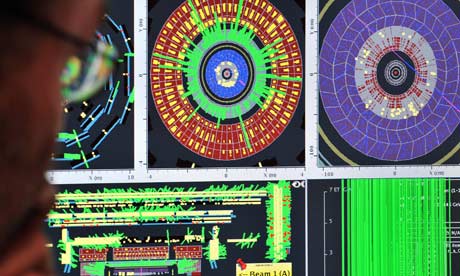
In the world of high energy physics, physicists from Fermilab and CERN presented updates on their competing searches to discover (or not) the Higgs boson. The two main experiments at Fermilab, CDF and DZero, are looking for traces of the Higgs particle in the debris of Tevatron collider’s proton-antiproton collisions. At CERN’s Large Hadron Collider scientists working at the two massive detectors, Atlas and CMS, are sifting through vast mountains of data accumulated from proton-proton collisions.

Both colliders have been smashing particles together in their ongoing quest to refine our understanding of the building blocks of matter, and to determine the existence of the Higgs particle. The Higgs is believed to convey mass to other particles, and remains one of the remaining undiscovered components of the Standard Model of physics.
The latest results presented in Grenoble show excess particle events, above a chance distribution, across the search range where the Higgs particle is predicted to be found. There is a surplus of unusual events at a mass of 140-145 GeV (gigaelectronvolts), which is at the low end of the range allowed for the particle. Tantalizingly, physicists’ theories predict that this is the most likely region where the Higgs is to be found.

[div class=attrib]Further details from Symmetry Breaking:[end-div]

Physicists could be on their way to discovering the Higgs boson, if it exists, by next year. Scientists in two experiments at the Large Hadron Collider pleasantly surprised attendees at the European Physical Society conference this afternoon by both showing small hints of what could be the prized particle in the same area.

“This is what we expect to find on the road to the Higgs,” said Gigi Rolandi, physics coordinator for the CMS experiment.

Both experiments found excesses in the 130-150 GeV mass region. But the excesses did not have enough statistical significance to count as evidence of the Higgs.

If the Higgs really is lurking in this region, it is still in reach of experiments at Fermilab’s Tevatron. Although the accelerator will shut down for good at the end of September, Fermilab’s CDF and DZero experiments will continue to collect data up until that point and to improve their analyses.

“This should give us the sensitivity to make a new statement about the 114-180 mass range,” said Rob Roser, CDF spokesperson. Read more about the differences between Higgs searches at the Tevatron and at the LHC here.

The CDF and DZero experiments announced expanded exclusions in the search for their specialty, the low-mass Higgs, this morning. On Wednesday, the two experiments will announce their combined Higgs results.

Scientists measure statistical significance in units called sigma, written as the Greek letter ?. These high-energy experiments usually require 3?  level of confidence, about 99.7 percent certainty, to claim they’ve seen evidence of something. They need 5? to claim a discovery. The ATLAS experiment reported excesses at confidence levels between 2 and 2.8?, and the CMS experiment found similar excesses at close to 3?.

After the two experiments combine their results — a mathematical process much more arduous than simple addition — they could find themselves on new ground. They hope to do this in the next few months, at the latest by the winter conferences, said Kyle Cranmer, an assistant professor at New York University who presented the results for the ATLAS collaboration.

“The fact that these two experiments with different issues, different approaches and different modeling found similar results leads you to believe it might not be just a fluke,” Cranmer said. “This is what it would look like if it were real.”

[div class=attrib]More from theSource here.[end-div]

[div class=attrib]CERN photograph courtesy Fabrice Coffrini/AFP/Getty Images. Tour de France image courtesy of NBCSports.[end-div]

MondayPoem: August 6th

In keeping with our atoms and all things atomic theme this week, Monday’s poem is authored by Sankichi Toge, Japanese poet and peace activist.

Twenty-four-year-old Sankichi Toge was in Hiroshima when the atomic bomb was dropped on his city. Sankichi Toge began writing poems as a teenager; his first collection of poetry entitled, “Genbaku shishu (“Poems of the Atomic Bomb”) was published in 1951. He died at the age of 36 in Hiroshima.

His poem August 6th is named for the day in August 1945 on which the atomic bomb was dropped on Hiroshima.

August 6th

How could I ever forget that flash of light!
In a moment thirty thousand people ceased to be
The cries of fifty thousand killed
Through yellow smoke whirling into light
Buildings split, bridges collapsed
Crowded trams burnt as they rolled about
Hiroshima, all full of boundless heaps of embers
Soon after, skin dangling like rags
With hands on breasts
Treading upon the spilt brains
Wearing shreds of burnt cloth round their loins
There came numberless lines of the naked
all crying
Bodies on the parade ground, scattered like
jumbled stone images
Crowds in piles by the river banks
loaded upon rafts fastened to shore
Turned by and by into corpses
under the scorching sun
in the midst of flame
tossing against the evening sky
Round about the street where mother and
brother were trapped alive under the fallen house
The fire-flood shifted on
On beds of filth along the Armory floor
Heaps, God knew who they were….
Heaps of schoolgirls lying in refuse
Pot-bellied, one-eyed
with half their skin peeled off, bald
The sun shone, and nothing moved
but the buzzing flies in the metal basins
Reeking with stagnant odor
How can I forget that stillness
Prevailing over the city of three hundred thousand?
Amidst that calm
How can I forget the entreaties
Of the departed wife and child
Through their orbs of eyes
Cutting through our minds and souls?

Famous for the wrong book

[div class=attrib]From the Guardian:[end-div]

Why is it that the book for which an author is best known is rarely their best? If history is the final judge of literary achievement, why has a title like Louis de Bernières’ Captain Corelli’s Mandolin risen to the top, overshadowing his much better earlier novels such as Señor Vivo and the Coca Lord? It’s not, I hope, the simple snobbery of insisting that the most popular can’t be the finest. (After all, who would dispute that Middlemarch is George Eliot’s peak? … You would? Great, there’s a space for you in the comments below.)

If someone reads Kurt Vonnegut‘s most famous book, Slaughterhouse-Five, and doesn’t like it, I’ll want to shout to them, “But it’s rubbish! Cat’s Cradle is much better! That’s the one you want to read!” It’s not just me, I’m sure. Geoff Dyer takes the view that it is John Cheever’s journals, not his stories, which represent his “greatest achievement, his principal claim to literary survival”. Gabriel Josipovici says that it is not Kafka’s The Trial or “Metamorphosis” – not any of his novels or stories – which “form [his] most sustained meditation on life and death, good and evil, and the role of art”, but his aphorisms.

So here I am going to list a few instances of a writer being famous for the wrong book, and my suggestions for where their greatest achievement really lies. Below, you can make your own suggestions (someone, please tell me I’ve just been reading the wrong Peter Carey or Emily Brontë), or let me know just how misguided I am.

Joseph Heller
Catch-22 is too long, messy and takes 100 pages to get going. Heller’s second novel, Something Happened, took even longer to write and justified the time. From its opening line (“I get the willies when I see closed doors”), it is a supremely controlled and meticulous masterpiece, grounded in the horror of daily living. The first time I read it I was overwhelmed. The second time I thought it was hilarious. The third time – getting closer to the age of the horribly honest narrator Bob Slocum – it was terrifying. It’s the book that keeps on giving.

[div class=attrib]More from theSource here.[end-div]

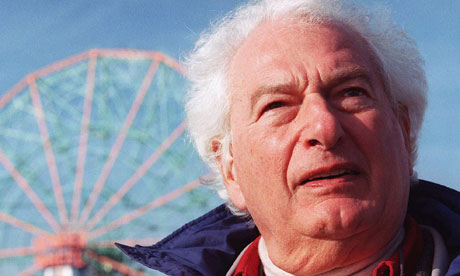
[div class=attrib]Image of Joseph Heller courtesy of Todd Plitt/AP.[end-div]