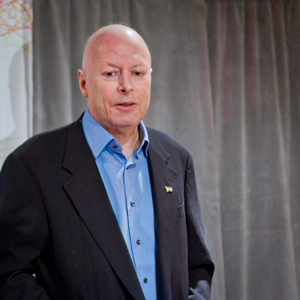
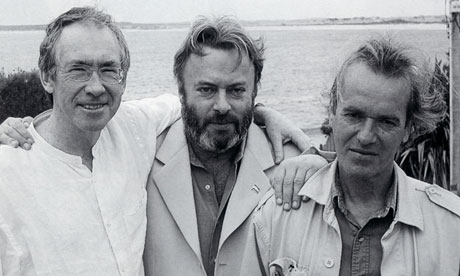
 Christopher Hitchens, incisive, erudite and eloquent as ever.
Author, polemicist par-excellence, journalist, atheist, Orwellian (as in, following in George Orwell’s steps), and literary critic, Christopher Hitchens shows us how the pen truly is mightier than the sword (though me might well argue to the contrary).
Now fighting oesophageal cancer, Hitchen’s written word continues to provide clarity and insight. We excerpt below part of his recent, very personal essay for Vanity Fair, on the miracle (scientific, that is) and madness of modern medicine.
[div class=attrib]From Vanity Fair:[end-div]
Death has this much to be said for it:
You don’t have to get out of bed for it.
Wherever you happen to be
They bring it to you—free.
—Kingsley Amis
Pointed threats, they bluff with scorn
Suicide remarks are torn
From the fool’s gold mouthpiece the hollow horn
Plays wasted words, proves to warn
That he not busy being born is busy dying.
—Bob Dylan, “It’s Alright, Ma (I’m Only Bleeding)”
When it came to it, and old Kingsley suffered from a demoralizing and disorienting fall, he did take to his bed and eventually turned his face to the wall. It wasn’t all reclining and waiting for hospital room service after that—“Kill me, you fucking fool!” he once alarmingly exclaimed to his son Philip—but essentially he waited passively for the end. It duly came, without much fuss and with no charge.
Mr. Robert Zimmerman of Hibbing, Minnesota, has had at least one very close encounter with death, more than one update and revision of his relationship with the Almighty and the Four Last Things, and looks set to go on demonstrating that there are many different ways of proving that one is alive. After all, considering the alternatives …
Before I was diagnosed with esophageal cancer a year and a half ago, I rather jauntily told the readers of my memoirs that when faced with extinction I wanted to be fully conscious and awake, in order to “do” death in the active and not the passive sense. And I do, still, try to nurture that little flame of curiosity and defiance: willing to play out the string to the end and wishing to be spared nothing that properly belongs to a life span. However, one thing that grave illness does is to make you examine familiar principles and seemingly reliable sayings. And there’s one that I find I am not saying with quite the same conviction as I once used to: In particular, I have slightly stopped issuing the announcement that “Whatever doesn’t kill me makes me stronger.”
In fact, I now sometimes wonder why I ever thought it profound. It is usually attributed to Friedrich Nietzsche: Was mich nicht umbringt macht mich stärker. In German it reads and sounds more like poetry, which is why it seems probable to me that Nietzsche borrowed it from Goethe, who was writing a century earlier. But does the rhyme suggest a reason? Perhaps it does, or can, in matters of the emotions. I can remember thinking, of testing moments involving love and hate, that I had, so to speak, come out of them ahead, with some strength accrued from the experience that I couldn’t have acquired any other way. And then once or twice, walking away from a car wreck or a close encounter with mayhem while doing foreign reporting, I experienced a rather fatuous feeling of having been toughened by the encounter. But really, that’s to say no more than “There but for the grace of god go I,” which in turn is to say no more than “The grace of god has happily embraced me and skipped that unfortunate other man.”
Or take an example from an altogether different and more temperate philosopher, nearer to our own time. The late Professor Sidney Hook was a famous materialist and pragmatist, who wrote sophisticated treatises that synthesized the work of John Dewey and Karl Marx. He too was an unrelenting atheist. Toward the end of his long life he became seriously ill and began to reflect on the paradox that—based as he was in the medical mecca of Stanford, California—he was able to avail himself of a historically unprecedented level of care, while at the same time being exposed to a degree of suffering that previous generations might not have been able to afford. Reasoning on this after one especially horrible experience from which he had eventually recovered, he decided that he would after all rather have died:
I lay at the point of death. A congestive heart failure was treated for diagnostic purposes by an angiogram that triggered a stroke. Violent and painful hiccups, uninterrupted for several days and nights, prevented the ingestion of food. My left side and one of my vocal cords became paralyzed. Some form of pleurisy set in, and I felt I was drowning in a sea of slime In one of my lucid intervals during those days of agony, I asked my physician to discontinue all life-supporting services or show me how to do it.
The physician denied this plea, rather loftily assuring Hook that “someday I would appreciate the unwisdom of my request.” But the stoic philosopher, from the vantage point of continued life, still insisted that he wished he had been permitted to expire. He gave three reasons. Another agonizing stroke could hit him, forcing him to suffer it all over again. His family was being put through a hellish experience. Medical resources were being pointlessly expended. In the course of his essay, he used a potent phrase to describe the position of others who suffer like this, referring to them as lying on “mattress graves.”
If being restored to life doesn’t count as something that doesn’t kill you, then what does? And yet there seems no meaningful sense in which it made Sidney Hook “stronger.” Indeed, if anything, it seems to have concentrated his attention on the way in which each debilitation builds on its predecessor and becomes one cumulative misery with only one possible outcome. After all, if it were otherwise, then each attack, each stroke, each vile hiccup, each slime assault, would collectively build one up and strengthen resistance. And this is plainly absurd. So we are left with something quite unusual in the annals of unsentimental approaches to extinction: not the wish to die with dignity but the desire to have died.
[div class=attrib]Read the entire article here.[end-div]
[div class=attrib]Image: Christopher Hitchens, 2010. Courtesy of Wikipedia.[end-div]


 The term “Internet of Things” was first coined in 1999 by Kevin Ashton. It refers to the notion whereby physical objects of all kinds are equipped with small identifying devices and connected to a network. In essence: everything connected to anytime, anywhere by anyone. One of the potential benefits is that this would allow objects to be tracked, inventoried and status continuously monitored.
 We celebrate the arrival of winter to the northern hemisphere with an evocative poem by Kenneth Patchen.


 Digital cameras and smartphones have enabled their users to become photographers. Affordable composition and editing tools have made us all designers and editors. Social media have enabled, encouraged and sometimes rewarded us for posting content, reviews and opinions for everything under the sun. So, now we are all critics. So, now are we all curators as well?
 Perhaps it’s time to re-think your social network when through it you know all about the stranger with whom you are sharing the elevator.
 Many mathematicians and those not mathematically oriented would consider Albert Einstein’s equation stating energy=mass equivalence to be singularly simple and beautiful. Indeed, e=mc2 is perhaps one of the few equations to have entered the general public consciousness. However, there are a number of other less well known mathematical constructs that convey this level of significance and fundamental beauty as well. Wired lists several to consider.
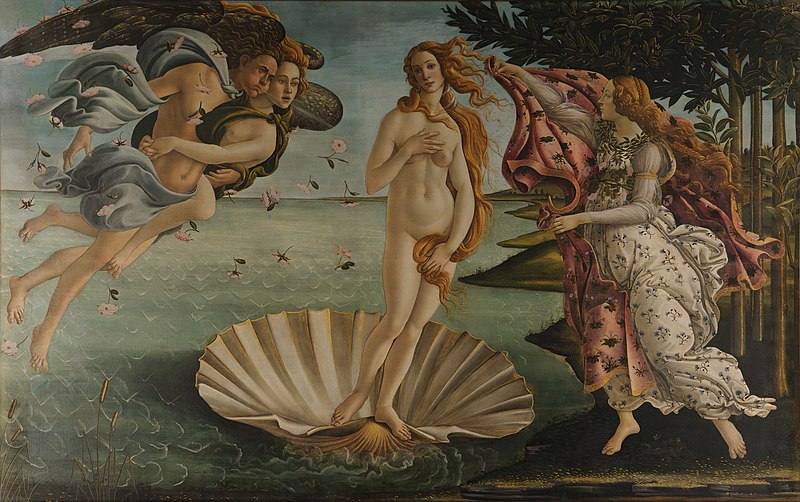 As in all other branches of science, there seem to be fascinating new theories, research and discoveries in neuroscience on a daily, if not hourly, basis. With this in mind, brain and cognitive researchers have recently turned their attentions to the science of art, or more specifically to addressing the question “how does the human brain appreciate art?” Yes, welcome to the world of “neuroaesthetics”.
 Having just posted
  The holidays approach, which for many means spending a more than usual amount of time with extended family and distant relatives. So, why talk face-to-face when you could text Great Uncle Aloysius instead?
 For adults living in North America, the answer is that it’s probably more likely that they would prefer a rapist teacher as babysitter over an atheistic one. Startling as that may seem, the conclusion is backed by some real science, excerpted below.
 Davide Castelvecchi over at Degrees of Freedom visits with one of the founding fathers of modern cosmology, Alan Guth.
 Robert Hayden is generally accepted as one of the premier authors of African American poetry. His expertly crafted poems focusing on the black historical experience earned him numerous awards.
 In recent years narcissism has been taking a bad rap. So much so that Narcissistic Personality Disorder (NPD) was slated for removal from the 2013 edition of the Diagnostic and Statistical Manual of Mental Disorders – DSM-V. The DSM-V is the professional reference guide published by the American Psychiatric Association (APA). Psychiatrists and clinical psychologists had decided that they needed only 5 fundamental types of personality disorder: anti-social, avoidant, borderline, obsessive-compulsive and schizotypal. Hence no need for NPD.
 The world lost pioneering biologist Lynn Margulis on November 22.
 Fahrenheit 2,451 may well be the temperature at which the glass in your Kindle or Nook eReader is likely to melt. This may give Ray Bradbury mixed feelings.
 Contemporary medical and surgical procedures have been completely transformed through the use of patient anaesthesia. Prior to the first use of diethyl ether as an anaesthetic in the United States in 1842, surgery, even for minor ailments, was often a painful process of last resort.