No tricks. No Ponzi scheme. No lottery win. No grand inheritance. It’s rather simple; it’s about simple lifestyle choices made at an early age. We excerpt part of Mister Money Moustache’s fascinating story below.
From the Washington Post:
To hundreds of thousands of devotees, he is Mister Money Mustache. And he is here to tell you that early retirement doesn’t only happen to Powerball winners and those who luck into a big inheritance. He and his wife retired from middle-income jobs before they had their son. Exasperated, as he puts it, by “a barrage of skeptical questions from high-income peers who were still in debt years after we were free from work,” he created a no-nonsense personal finance blog and started spilling his secrets. I was eager to know more. He is Pete (just Pete, for the sake of his family’s privacy). He lives in Longmont, Colo. He is ridiculously happy. And he’s sure his life could be yours. Our conversation was edited for length and clarity..
…
So you retired at 30. How did that happen?
I was probably born with a desire for efficiency — the desire to get the most fun out of any possible situation, with no resources being wasted. This applied to money too, and by age 10, I was ironing my 20 dollar bills and keeping them in a photo album, just because they seemed like such powerful and intriguing little rectangles.
But I didn’t start saving and investing particularly early, I just maintained this desire not to waste anything. So I got through my engineering degree debt-free — by working a lot and not owning a car — and worked pretty hard early on to move up a bit in the career, relocating from Canada to the United States, attracted by the higher salaries and lower cost of living.
Then my future wife and I moved in together and DIY-renovated a junky house into a nice one, kept old cars while our friends drove fancy ones, biked to work instead of driving, cooked at home and went out to restaurants less, and it all just added up to saving more than half of what we earned. We invested this surplus as we went, never inflating our already-luxurious lives, and eventually the passive income from stock dividends and a rental house was more than enough to pay for our needs (about $25,000 per year for our family of three, with a paid-off house and no other debt).
What sort of retirement income do you have?
Our bread-and-butter living expenses are paid for by a single rental house we own, which generates about $25,000 per year after expenses. We also have stock index funds and 401(k) plans, which could boost that by about 50 percent without depleting principal if we ever needed it, but, so far, we can’t seem to spend more than $25,000 no matter how much we let loose. So the dividends just keep reinvesting.
…
You describe the typical middle-class life as an “exploding volcano of wastefulness.” Seems like lots of personal finance folks obsess about lattes. Are you just talking about the lattes here?
The latte is just the foamy figurehead of an entire spectrum of sloppy “I deserve it” luxury spending that consumes most of our gross domestic product these days. Among my favorite targets: commuting to an office job in an F-150 pickup truck, anything involving a drive-through, paying $100 per month for the privilege of wasting four hours a night watching cable TV and the whole yoga industry. There are better, and free, ways to meet these needs, but everyone always chooses the expensive ones and then complains that life is hard these days.
Read the entire article following the jump or visit Mr. Money Moustache’s blog.
Image courtesy of Google Search.
 Since Einstein first published his elegant theory of General Relativity almost 100 years ago it has proved to be one of most powerful and enduring cornerstones of modern science. Yet theorists and researchers the world over know that it cannot possibly remain the sole answer to our cosmological questions. It answers questions about the very, very large — galaxies, stars and planets and the gravitational relationship between them. But it fails to tackle the science of the very, very small — atoms, their constituents and the forces that unite and repel them, which is addressed by the elegant and complex, but mutually incompatible Quantum Theory.
 The collective IQ of Google, the company, inched up a few notches in January of 2013 when they hired


 Some words give us the creeps, they raise the hair on back of our heads, they make us squirm and give us an internal shudder. “Moist” is such as word.


 By all accounts serial entrepreneur, inventor and futurist Ray Kurzweil is Google’s most famous employee, eclipsing even co-founders Larry Page and Sergei Brin. As an inventor he can lay claim to some impressive firsts, such as the flatbed scanner, optical character recognition and the music synthesizer. As a futurist, for which he is now more recognized in the public consciousness, he ponders longevity, immortality and the human brain.

 Pseudoscience can be fun — for comedic purposes only of course. But when it is taken seriously and dogmatically, as it often is by a significant number of people, it imperils rational dialogue and threatens real scientific and cultural progress. There is no end to the lengthy list of fake scientific claims and theories — some of our favorites include: the moon “landing” conspiracy, hollow Earth, Bermuda triangle, crop circles, psychic surgery, body earthing, room temperature fusion, perpetual and motion machines.


 Last week Amazon purchased Goodreads the online book review site. Since 2007 Goodreads has grown to become home to over 16 million members who share a passion for discovering and sharing great literature. Now, with Amazon’s acquisition many are concerned that this represents another step towards a monolithic and monopolistic enterprise that controls vast swathes of the market. While Amazon’s innovation has upended the bricks-and-mortar worlds of publishing and retailing, its increasingly dominant market power raises serious concerns over access, distribution and choice. This is another worrying example of the so-called filter bubble — where increasingly edited selections and personalized recommendations act to limit and dumb-down content.
 Where is the technology of the Culture when it’s most needed? Nothing more to add.
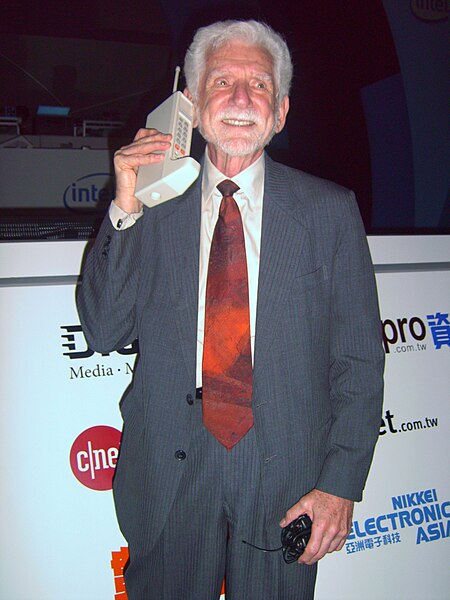 Martin Cooper. You may not know that name, but you and a fair proportion of the world’s 7 billion inhabitants have surely held or dropped or prodded or cursed his offspring.
 Robert Hof argues that the time is ripe for Steve Jobs’ corporate legacy to reinvent the TV. Apple transformed the personal computer industry, the mobile phone market and the music business. Clearly the company has all the components in place to assemble another innovation.