One of our favorite thinkers, Nasim Nicholas Taleb, calls this tinkering — the iterative process by which ideas and actions can take root and become successful. Evolution is a wonderful example of this tinkering — repetitive failure and incremental progress. Many entrepreneurs in Silicon Valley take this to heart.
Tech entrepreneur, Michele Serro, describes some key elements to successful tinkering below.
From the Wall Street Journal:
If there was ever a cliche about entrepreneurialism, it’s this: Joe or Jane McEntrepreneur were trying to book a flight/find flattering support garments/rent a car and were profoundly dissatisfied with the experience. Incensed, they set out to design a better way — and did, earning millions in the process.
It seems that, for entrepreneurs, it’s dissatisfaction rather than necessity that is the mother of invention. And while this cliche certainly has its foundation in truth, it’s woefully incomplete. The full truth is, the average startup iterates multiple times before they find the right product, often drawing on one or many approaches along the way before finding traction. Here are five of the most common I’ve come across within the startup community.
Algebra. There’s an old yarn you learn in film school about the power of the pithy pitch (say that five times fast). The story goes that when screenwriters were shopping the original Alien movie, they allegedly got the green light when they summed it up to studio execs by saying ”It’s Jaws. In space.”
In many ways, the same thing is happening in the startup world. “It’s Facebook FB -2.27%. But for pets,” or “It’s Artsy meets Dropbox meets Fab.” Our tendency to do this speaks to the fact that there are very few — if any — truly new ideas. Most entrepreneurs are applying old ideas to new industries, or combining two seemingly unrelated ideas (or existing businesses) together – whether they’re doing it consciously, or not.
Subtraction. Many great ideas begin with a seemingly straightforward question: “How could I make this easier?” Half the genius of some of the greatest entrepreneurs — Steve Jobs springs immediately to mind — is the ability to remove the superfluous, unnecessary or unwieldy from an existing system, product or experience. A good exercise when you are in search of an idea is simply to ask yourself “What is it about an existing product, service, or experience that could — and therefore should — be less of a hassle?”
Singularity. There’s an old saying that goes: “Figure out what you love to do and you’ll never work a day in your life.” Entrepreneurs are born out of the desire to spend one’s life pursuing a passion — assuming that they’re fortunate enough to have identified it early. The fact is that any kind of startup is really, really hard work. No matter how fast a vesting schedule or how convivial an office culture, the only thing that can truly sustain you through the bad days is having a deep, personal interest in your area of focus. The most successful entrepreneurs genuinely love what they do, and not simply because of the potential payoff. I once met a pair of British entrepreneurs living in France who loved nothing more than spending all day in a pub — meeting up with friends, watching a soccer game, and giving each other the requisite hard time about just about everything.
For their entrepreneurial class as part of their MBA coursework at Insead, they decided to draft the business plan for an English-style microbrewery in Paris — mainly because the research phase would involve a lot of sitting around in bars. But during the process of launching their fictitious company, they realized there really was an opportunity to make a living doing exactly what they loved, and went on to successfully launch seven such pubs, sprinkled all over the city.
When hiring at Doorsteps, I start by asking people what they would do with their lives if every career paid the same. If the gap between their truest desires and the job on offer is simply too wide, I encourage them to keep looking. Not because they can’t be successful with us, too, but because they’ll likely be even more successful elsewhere — when they are driven by passion as much as profit.
Optimization. Sometimes entrepreneurs benefit by letting someone else lay the groundwork for their ideas. Indeed, a great many startups are born by simply building a better mousetrap; that’s to say observing a compelling business already in existence but that’s struggling to find traction. These entrepreneurs have the ability to recognize that the idea itself is sound but the execution is flawed. In this case, they simply address the oversight of the previous version. Instagram quite famously beat Hipstamatic to the jaw dropping $1 billion dollar prize by understanding the role social needed to play in the app’s experience. By the time Hipstamatic realized their error, Instagram had almost four times the amount of users, largely muscling them out of a competitive niche market.
Read the entire article following the jump.

 It should come as no surprise that those who deny the science of climate change and human-propelled impact on the environment would also shirk from purchasing products and services that are friendly to the environment.
 That a small group of Young British Artists (YBA) made an impact on the art scene in the UK and across the globe over the last 25 years is without question. Though, whether the public at large will, 10, 25 or 50 years from now (and beyond), recognize a Damien Hirst spin painting or Tracy Emin’s “My Bed” or a Sarah Lucas self-portrait — “The Artist Eating a Banana” springs to mind — remains an open question.
 Pathological criminals and the non-criminals who seek to understand them have no doubt co-existed since humans first learned to steal from and murder one another.
 Since Einstein first published his elegant theory of General Relativity almost 100 years ago it has proved to be one of most powerful and enduring cornerstones of modern science. Yet theorists and researchers the world over know that it cannot possibly remain the sole answer to our cosmological questions. It answers questions about the very, very large — galaxies, stars and planets and the gravitational relationship between them. But it fails to tackle the science of the very, very small — atoms, their constituents and the forces that unite and repel them, which is addressed by the elegant and complex, but mutually incompatible Quantum Theory.
 The collective IQ of Google, the company, inched up a few notches in January of 2013 when they hired


 Some words give us the creeps, they raise the hair on back of our heads, they make us squirm and give us an internal shudder. “Moist” is such as word.

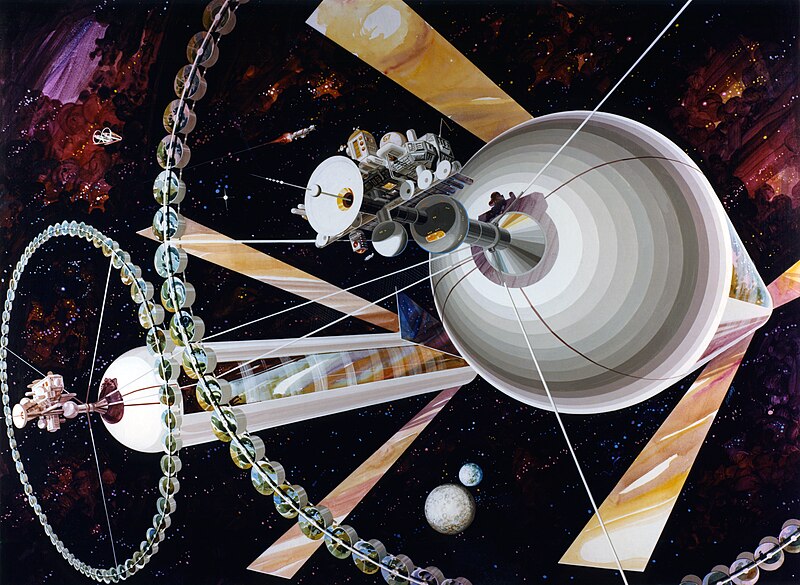

 By all accounts serial entrepreneur, inventor and futurist Ray Kurzweil is Google’s most famous employee, eclipsing even co-founders Larry Page and Sergei Brin. As an inventor he can lay claim to some impressive firsts, such as the flatbed scanner, optical character recognition and the music synthesizer. As a futurist, for which he is now more recognized in the public consciousness, he ponders longevity, immortality and the human brain.

 Pseudoscience can be fun — for comedic purposes only of course. But when it is taken seriously and dogmatically, as it often is by a significant number of people, it imperils rational dialogue and threatens real scientific and cultural progress. There is no end to the lengthy list of fake scientific claims and theories — some of our favorites include: the moon “landing” conspiracy, hollow Earth, Bermuda triangle, crop circles, psychic surgery, body earthing, room temperature fusion, perpetual and motion machines.